
 VISIT US
  CONTACT US
  SUPPORT US
 APPLY NOW
At our school, we are proud to offer a rich and engaging Modern Foreign Languages (MFL) curriculum in both Spanish and French. Our aim is to foster a love of languages from an early age, while also promoting cultural awareness, confidence in communication and a strong sense of inclusion across all year groups.
Spanish Curriculum Overview
Our Spanish curriculum begins in Reception, where children are introduced to the basics of the language through fun and interactive learning. They explore greetings, numbers from 1–10 and colours in the Autumn Term, before progressing to numbers up to 20 and fruits in the Spring Term. By the Summer Term, they are confidently learning the days of the week and naming animals.
In Key Stage 1, pupils build on these foundations. In Year 1, they learn to introduce themselves, count up to 40 and name the months of the year. They then explore seasons, weather and farm animals before finishing the year with topics such as body parts and shapes. Year 2 pupils extend their knowledge further with numbers up to 100, dates and seasons, and vocabulary related to breakfast. They also begin learning about family members, pets and basic grammar such as articles (el, la), alongside developing their phonics and alphabet knowledge.
In Key Stage 2, Spanish learning becomes more structured and detailed. Year 3 pupils learn about gender agreement and weather expressions, while also learning classroom objects, physical descriptions, sports and simple health-related vocabulary. In Year 4, pupils deepen their understanding of numbers into the hundreds and thousands, revisit dates and seasons, and explore shapes and colours through links to artists such as Picasso and Miró, alongside historical topics like the Tudors.
Year 5 focuses on practical communication, including telling the time, describing daily habits and revising gender agreement. Pupils also learn about food, breakfast items and -AR verb endings, before moving on to school subjects and verbs. By Year 6, pupils are confidently using regular verbs in the present tense, exploring Spanish-speaking countries and their traditions, and learning about festivals around the world, while consolidating their grammar knowledge.
French Curriculum Overview
French is introduced in Key Stage 2, starting in Year 3. Pupils begin with greetings, numbers up to 20 and colours in the Autumn Term. They then progress to numbers up to 31, fruits and days of the week, before learning about animals and months of the year in the Summer Term.
In Year 4, pupils explore topics such as weather and European countries and languages. They extend their knowledge up to 100 and learn how to express dates and describe body parts, before moving on to leisure activities and sports.
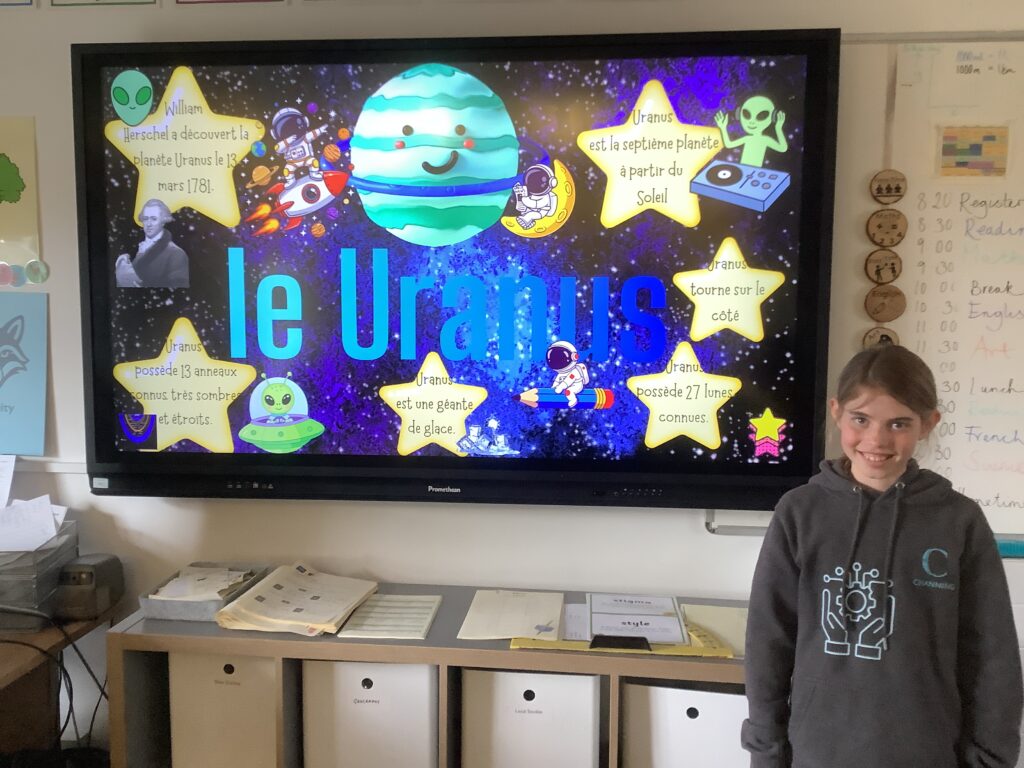
Year 5 pupils focus on family members and even explore topics like planets, followed by pets, the verb ‘to have’ and an introduction to gender and plural forms. They also learn about French-speaking countries, developing their cultural understanding alongside their language skills.
In Year 6, pupils apply their knowledge in more complex contexts. They learn vocabulary related to school subjects and the verb ‘to study’, as well as clothing. They then explore telling the time, daily habits and grammatical structures such as gender and plural agreement. By the Summer Term, pupils are using regular verbs confidently and describing physical appearances.
Promoting Inclusion Through Language and Culture
In addition to our language curriculum, we place a strong emphasis on inclusion and celebrating individuality. This year, we held a special workshop bringing together Year 2 and Year 12 pupils to create sunflowers for Inclusion Week. Each child reflected on what makes them unique, writing their thoughts on the petals to create a vibrant and meaningful display celebrating diversity.
We also marked International Women’s Day with a whole-school assembly, where pupils shared and read a story centred on the message that ‘girls can do anything’. This was a powerful opportunity to promote equality, challenge stereotypes and inspire all pupils to believe in their potential.
Through both our MFL curriculum and wider school activities, we strive to create an environment where every child feels valued, included and inspired to learn about the world around them.