Senior School Curriculum

The Curriculum

In Year 7 at Channing, we offer girls a wide and enriching range of subjects. As well as more traditional subjects, girls study Philosophy, Latin and Design & Technology. We aim to nurture intellectual rigour and independent thinking in a positive, fun and supportive learning environment. Heads of Department carry responsibility for the teaching of their subject and the delivery of the academic curriculum. Their names are clearly indicated in the staff list on our website and are led by the Deputy Head (Academic), Ms Flint.

All staff provide extension work to stretch the most able, while our Head of SEND and her team supports girls who may have specific difficulties in certain areas.

A typical week in Year 7 includes:

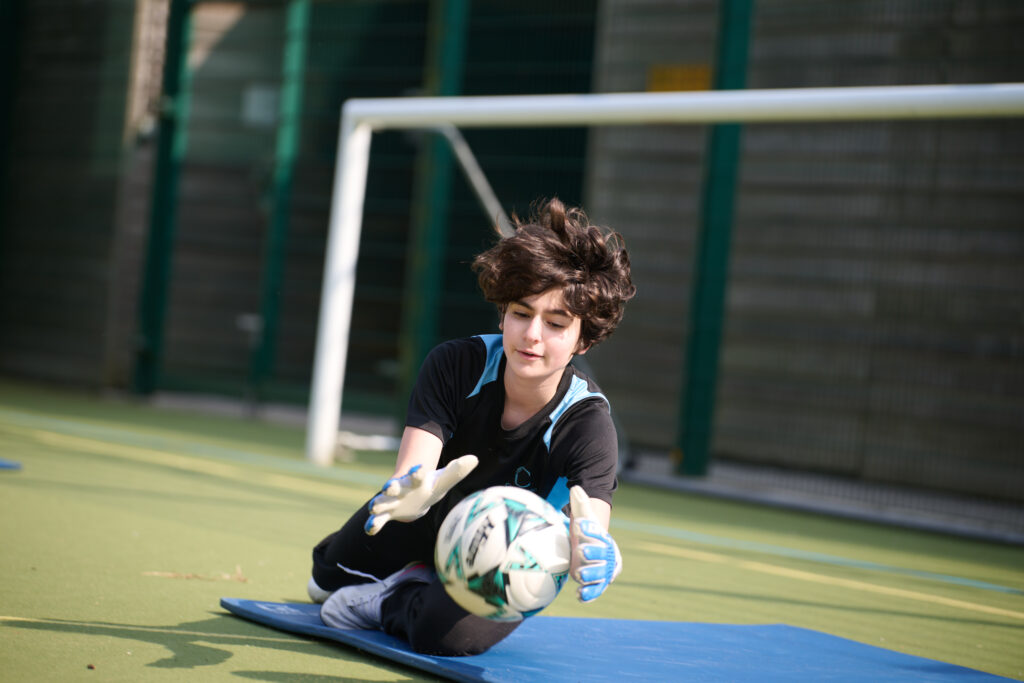
  • 3 x PE lesson
  • 4 x English lessons
  • 4 x Maths lessons
  • 4 x Science lessons

In Years 7 and 8, students study combined science. They are taught three modules each of Biology, Chemistry and Physics in both years.

Modern Foreign Language Choice

Ahead of Year 7, pupils choose one modern foreign language from either French, German or Spanish. This should be a language they are not already fluent in and we encourage pupils to try out a new language. Pupils attend 3 language lessons per week. In Year 8, they choose a second language and attend 2 lessons per week in their first language and 3 lessons per week in the second language.

If pupils are already fluent in French, Spanish or German, they can study the other two languages we offer and prepare for GCSE in their home language at a later stage through our Heritage Language Programme. They may then sit their GCSE early at Channing at the end of Year 9 or Year 10. We advise when they are ready to do this to maximise their potential.

We are not able to support the teaching or examination of any language we do not offer.

Stretch and Challenge & The Ellery Programme

We provide stretch and challenge for all our pupils through adaptive teaching in lessons and a rich and evolving super-curricular programme that grows with student interests. The journey begins in Year 7 with the Ellery Programme, where scholars explore ambitious mini-projects and presentations, ranging from alien invasions and micro:bit programming to podcast creation and prehistoric cave art, designed to encourage creativity, curiosity and cross-disciplinary thinking. As students progress, they are inspired to take on collaborative projects, academic competitions and challenges, supported by enthusiastic Year 12 subject ambassadors who act as mentors and role models. Opportunities may include researching and writing academic essays for external competitions such as those run by the John Locke Institute, the Harvard Political Review or Immerse Education, as well as watching older scholars present their Higher Project Qualification work. Central to the programme is the development of confident communication and presentation skills: while AI can assist with research and idea generation, we place strong emphasis on the human qualities of critical thinking, originality and articulate expression that academic scholars will need for the future. Our aim is to foster intellectual confidence, curiosity and a lifelong love of learning.

Art

Art

The Art Department develops pupils’ visual curiosity, creative confidence and ability to see the world from fresh perspectives. At Channing, pupils learn to observe closely, take imaginative risks and communicate ideas with purpose. We want them to leave lessons feeling inspired, challenged and increasingly confident in developing an individual artistic voice.

Lessons are practical, exploratory and ambitious. Pupils draw, paint, print, photograph, sculpt, stitch, design and critique, working independently and collaboratively. Four specialist teachers, all practising artists, are supported by two part-time technicians. Their expertise spans painting, printmaking, ceramics, sculpture, textiles, photography, digital media and mixed-media practice, enabling pupils to explore art through a rich variety of processes and perspectives.

Curriculum journey

Pupils begin in Year 7 by building strong observational and technical skills through still life, drawing, painting, printmaking, photography, ceramics and introductory digital design and AutoCAD. They experiment with charcoal, pencil, watercolour and acrylic paint, learning to use sketchbooks as spaces for enquiry and creative development. In Years 8 and 9, these sketchbooks grow into extensive visual journals as pupils work more independently and undertake increasingly sequential, project-based work. Projects may include Japanese kintsugi, ceramic miniature busts and a ceramic Highgate streetscape. At GCSE, pupils follow the OCR course, developing an individual portfolio across specialist disciplines before completing their externally set task.

Stretch and outcomes

Pupils are encouraged to move beyond their first ideas, investigate artists from different periods, cultures and disciplines, and connect practical work with critical and contextual study. Workshops and first-hand encounters with art deepen technical skill and creative independence. The results are compelling and highly individual: pupils curate and mount their own exhibitions, presenting sketchbooks, gallery reviews, studies and finished works with confidence.

Beyond the classroom

Beyond lessons, pupils can attend the weekly Life Class, develop traditional and digital techniques through photography clubs, use the darkroom and enter external competitions such as Young Art. Gallery visits include exhibitions at Tate Modern, Tate Britain and the V&A, while artist-in-residence projects, workshops and themed exhibitions bring new ideas into school. Recent highlights have included pupils exhibiting at Young Art London, with a Channing pupil receiving the Rector’s Prize. These opportunities encourage independence, experimentation and intellectual ambition.

Careers

Careers

A broad and well-researched offering to prepare our pupils for the next stages in life. Carefully curated by our Head of Careers, Ms Pavlopoulos, in the light of feedback from the whole Channing community and particularly our student Careers Leaders, our Careers Programme provides advice, information and guidance to all Senior School pupils with bespoke events available for those with specific interests as part of the Channing Experience.

Chatting with Channing

Listen to our interview with Head of Careers Eleni Pavlopoulos and some of our pupils from our podcast, Chatting with Channing.

We’ll find out about the careers programme in Channing School and about the pupil’s roles as career leaders.


Years 7-9

In Years 7 and 8, pupils attend a selection of talks and a Careers Day which focusses on self-discovery as well as introducing various careers. Every pupil participates in the National Enterprise Challenge which one of our Year 7 Teams won last year!

GCSE

Pupils enjoy multiple Careers Information Sessions showcasing a range of careers throughout Years 10 and 11. Workplace Insight Events take place from Year 10 onwards. Year 10 pupils attend an Entrepreneur Panel, and participate in Take Your Daughter to Work Day. Year 11 pupils are offered a range of events including advice in a student-led A Level Options Marketplace and a Sixth Form Options interview with Senior Staff. They also participate in Morrisby Aptitudes Analysis and benefit from an individual meeting with the Head of Careers to ensure that their planned A Level choices are compatible with potential careers pathways. Year 11 students are instructed in CV writing and prepare an initial CV for their work experience (during the summer holidays). Both year groups are invited to our annual Careers Convention and Networking (with 16 different professions represented). Year 11 also receive a termly Opportunities bulletin which details super-curricular courses and activities and work experience opportunities – both online and in person.

For further information, please contact careers@channing.co.uk.

Latin

Latin

Through the study of Latin, the Classics Department aims to develop pupils’ curiosity about the ancient world and a love for the language spoken and written by the Romans more than 2000 years ago. Pupils learn to appreciate ancient culture through the study of Latin stories and original ancient texts, as well as developing their ability to analyse, think critically and communicate. Latin lessons encourage pupils to think independently and discover how the study of an ancient language is fully relevant today.

Lessons are highly varied, including a mix of language, literature and civilisation work. Pupils enjoy engaging in class discussions, mapping ancient concepts onto the modern world, and teachers often use cross-curricular links to illustrate how Latin developed into modern languages. Pupils also read texts in the original language and critique their content and style. The department’s teachers bring interests in linguistics, Latin literature and Roman history to their lessons, allowing pupils to study the subject in depth and from many perspectives.

Curriculum

Pupils begin Latin in Year 7, using the Cambridge Latin Course, which introduces aspects of the Latin language through stories following the same characters and set in various locations in the Roman world, starting in Pompeii. In Year 8, students continue the Course, continuing to learn more about the language through stories which delve into life in Roman Britain. Students can choose to continue with Latin in Year 9. They continue studying the Cambridge Latin Course and develop their linguistic skills through learning about life in Roman-occupied Ancient Egypt. In Key Stage 3 there is a strong emphasis not only on cultivating an understanding of the Latin language, but also on independent project work relating to these ancient civilisations.

At GCSE, pupils use the Latin to GCSE textbooks to develop their knowledge of language, allowing them to translate more difficult passages and, most excitingly, to read prescribed texts in the original Latin. Pupils relish this new challenge and enjoy analysing the characters and narrative styles. We follow the OCR GCSE course; full details can be found in the GCSE Options booklet.

Extra-curricular

Beyond the classroom, our Classics Society meets weekly to hear talks delivered by pupils, staff, alumnae and visiting speakers. Topics have ranged from Catullus’ love poetry to ghosts in the ancient world. Key Stage 3 pupils can enjoy Mythologers Club, in which Sixth Formers run sessions on a range of mythological stories and creatures, on which attendees produce their own creative work, which fosters their independence and research skills.

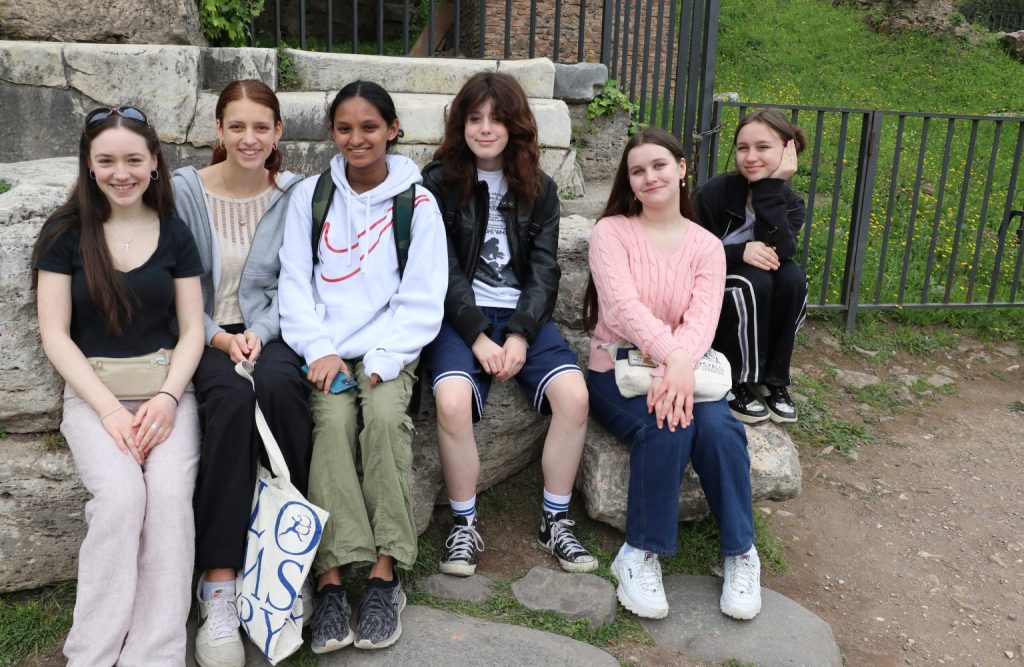
The department also makes the most of its London location and we give our pupils every opportunity to extend their studies by visiting sites such as the British Museum and London Mithraeum. We also venture beyond London, taking trips to St Albans (ancient Verulamium) and Bath, and even further afield, regularly running trips to Rome, the Bay of Naples, Sicily and Greece. These trips encourage pupils to extend their learning by considering more deeply how Romans really lived.

Classics: Ancient Greek

Classics: Ancient Greek

Through the study of Classical Greek, the Classics Department aims to develop pupils’ curiosity about the ancient world and a love for the intriguing language spoken and written by many societies more than 2000 years ago. Pupils learn to appreciate ancient culture through the study of Greek stories and original ancient texts, as well as developing their ability to analyse, think critically and communicate. Learning Classical Greek also encourages pupils to think independently. Pupils leave lessons inspired and eager to discover more about the links between Greek and other ancient and modern languages and cultures.

Lessons are highly varied and exploratory. Classes are small, allowing for in depth discussions, debates and collaborative work. Lessons include the study of Greek language and literature, through which pupils discover more about ancient Greek society. Pupils relish the challenge of reading texts in the original language, critiquing their content and style. The department’s teachers bring interests in linguistics, Greek literature, art and philosophy to their lessons, offering pupils a multi-disciplinary and diverse approach to their study of Greek.

Curriculum

Pupils have their first taste of Classical Greek within Latin lessons in Year 8, and can then choose to study our ‘Gratin’ course in Year 9, lessons which combine the teaching of Classical Greek and Latin. This is a highly enjoyable and academically ambitious course, in which students develop their linguistic skills in both languages. We use the ‘Greek to GCSE’ textbook through which pupils learn the fundamentals of Classical Greek, observing the direct links with Latin, and discover more about the ancient Greek world through stories about Greek society.

In Year 10, pupils have the opportunity to continue their study of Classical Greek. They work towards the Intermediate Certificate in Classical Greek, a ‘twilight’ course, studied after school, which is examined as a public exam at the end of Year 10. Pupils complete ‘Greek to GCSE’ Book 1, building on their knowledge of the Greek language through stories about Greek mythology. Full details of this course can be found in the GCSE Options booklet.

In Year 11, pupils can choose to continue with their ‘twilight’ Greek lessons, working through a bridging course developed by the department. Students use ‘Greek to GCSE’ Book 2, completing the GCSE language content and beginning to read and analyse original ancient literature. This is a wonderful extension opportunity which prepares pupils for A Level, should they choose to continue with this fascinating subject.

Extra-curricular

Beyond the classroom, our Classics Society for pupils in Years 9-13 meets weekly to hear talks delivered by pupils, staff, alumnae and visiting speakers. Topics have ranged from the role of Clytemnestra in Greek tragedy to debating the fate of the Parthenon Marbles. The department also makes the most of its London location and we give our pupils every opportunity to extend their studies by visiting sites such as the British Museum and London Mithraeum. We also venture beyond London, for example taking regular trips to Warwick University’s ancient drama festival, and even further afield, regularly running trips to Greece, Rome, the Bay of Naples and Sicily. These trips encourage pupils to extend their learning by considering more deeply how the ancients really lived.

Classics: Classical Civilisation

students laughing

Classics: Classical Civilisation

Through the study of Classical Classical Civilisation, the Classics Department aims to develop pupils’ curiosity about the ancient world and illustrate to them how societies that lived over 2000 years ago can still be relevant today. Pupils learn to appreciate ancient culture through the study of Greek and Roman mythology, and they read original texts in translation, developing their ability to analyse, think critically and communicate. Pupils leave lessons inspired and fascinated by the stories that have captured the imagination for millenia.

Lessons are highly varied and focus on discussion, debate and collaboration with peers. They include a range of activities, such as reading ancient texts in translation and analysing visual sources, as well as reading and listening to secondary scholarship to enhance their understanding of texts and archaeology. Pupils relish the challenges Classical Civilisation offers and study it from many different perspectives thanks to the department’s varied interests, ranging from Greek and Roman literature to Roman history, Greek art and philosophy.

Curriculum

Pupils have their first taste of Classical Civilisation through their Latin lessons in Years 7 and 8, and they can then choose to study it as a separate subject from Year 9. This is an academically rigorous course, developed by the department, in which students develop their essay-writing and literary analysis skills, needed not just for GCSE Classical Civilisation, but many other subjects too. The course focuses on women in the ancient world, with pupils learning how real women in Greece and Rome lived from the 5th century BCE to the 1st century CE and the stories of Greek mythological women. In the second half of Year 9 pupils read and analyse Homer’s Odyssey Book 9.

The GCSE course is rich and exciting. At Channing we follow the Myth & Religion and Roman City Life modules. In the first component, pupils explore Greek and Roman beliefs about the divine world, and the nature of religious sites and worship. In their study of Roman City Life, pupils relish the academic challenge of reading selections of original Roman literature in translation. They analyse these in close detail, understanding more about Roman attitudes to their own society and making interesting links with the modern world. Pupils broaden their understanding of the cultural context by also learning about Roman civilisation and archaeology. Full details of the GCSE course can be found in the GCSE Options booklet.

Extra-curricular

Beyond the classroom, our Classics Society for pupils in Years 9-13 meets weekly to hear talks delivered by pupils, staff, alumnae and visiting speakers. Topics have ranged from pupils’ own Classics-themes holidays to debating the fate of the Parthenon Marbles. The department also makes the most of its London location and we give our pupils every opportunity to extend their studies by visiting sites such as the British Museum and London Mithraeum. We also venture beyond London, for example taking regular trips to Bath and Warwick University’s ancient drama festival, and even further afield, regularly running trips to Greece, Rome, the Bay of Naples and Sicily. These trips encourage pupils to extend their learning by considering more deeply how the ancients really lived and putting their knowledge into context.

Computing

Computing

The Computing Department aims to develop pupils’ curiosity about how digital technologies work and how they shape the world around us. At Channing, pupils learn to approach problems logically, creatively and confidently, while considering the opportunities and responsibilities created by emerging technologies. We want pupils to leave lessons feeling empowered to understand, question and create with technology.

Lessons are practical, analytical and exploratory. Pupils regularly code, design, test, debug and evaluate solutions, developing resilience alongside technical precision. Teachers bring expertise in programming, artificial intelligence, robotics, computational thinking and digital systems. Close collaboration with the Science and Design Technology departments also enables pupils to experience computing as an interdisciplinary subject with wide-ranging real-world applications.

Pupils begin in Year 7 by exploring logic, computational thinking and core programming concepts through Python, Turtle, HTML and CSS. They build websites and program Marty robots, progressing from sequences to variables, loops and functions. In Year 8, pupils deepen their understanding through flowcharts, trace tables, arrays, data representation and increasingly complex Python tasks, while using micro to design games. Year 9 introduces GCSE-style topics, including Boolean logic, logic gates, artificial intelligence, machine learning, pseudocode and maintainable program design. At GCSE, pupils study Cambridge International iGCSE Computer Science, developing a rigorous understanding of computer systems, algorithms, programming and logic. The course combines theoretical knowledge with practical problem-solving and programming in Python and pseudocode, preparing pupils well for further study in Computer Science and related disciplines. Further information about the course content, assessment structure and entry guidance can be found in the GCSE Options Booklet.

Challenge is embedded throughout the curriculum. All Key Stage 3 pupils take part in the Bebras Computational Thinking Challenge and coding challenges, as well as following the Google DeepMind artificial intelligence programme. Pupils are encouraged to move beyond simply making programs work: they analyse efficiency, refine solutions, explain their reasoning and apply mathematical knowledge in unfamiliar contexts. Through independent projects such as Hangman, Tic-Tac-Toe and Rock, Paper, Scissors, they learn to turn ideas into robust, purposeful programs.

Beyond the classroom, pupils can extend their learning through robotics, coding challenges, artificial intelligence activities and collaborative technology projects. Opportunities to work with Marty robots, micro and game development make computing tangible and creative, while cross-curricular projects with Science and Design Technology demonstrate how digital skills contribute to innovation. These experiences help pupils see Computer Science as a living, rapidly evolving discipline and develop the confidence, independence and intellectual ambition needed for further study and future careers.

Drama

Drama

The Drama Department aims to develop pupils’ curiosity about artistic expression, stagecraft, and live performance. At Channing, pupils learn to command the stage, embrace ensemble teamwork, and think like instinctive theatre-makers, leaving lessons feeling creatively fulfilled, resilient, and artistically confident.

Lessons are active, imaginative, and deeply practical, taking full advantage of our school facilities. Our pupils learn and perform across two distinct environments: a versatile studio space and our stunning, industry-standard proscenium arch theatre. The department’s teachers bring diverse interests in classical text, contemporary companies, and technical production arts, allowing pupils to study theatre in depth from both performance and technical perspectives.

Curriculum Journey

Pupils begin Drama in Years 7 and 8 with one weekly period, exploring a rich variety of styles and texts including the likes of slapstick, fantasy drama, physical theatre, pantomime, and Macbeth, alongside practitioners like Stanislavski and Berkoff. In Year 9, Drama becomes a popular option taught twice weekly. Pupils develop advanced skills studying modern texts like DNA, exploring comedy in theatre, technical production arts and creating original devised work using the methodologies of theatre companies/practitioners.

At GCSE, we follow the Eduqas specification, which develops pupils’ knowledge as performers and designers. The course covers three parts: creating an original group piece inspired by a practitioner; performing two published text extracts for an examiner (assessed on acting or a design skill like costume, lighting, sound, or set); and studying Sabrina Mahfouz’s adaptation of Noughts & Crosses alongside live production evaluation. Moving into A Level, we continue with the Eduqas syllabus, where pupils refine their performance skills or deepen their technical knowledge, choosing either lighting, sound, costume, or set design.

Beyond the Classroom

Pupils can join our vibrant KS3 Drama Club and numerous large-scale productions. Recent lower-school KS3 productions include The Lion, The Witch and The Wardrobe, Alice in Wonderland, Daisy Pulls It Off, and James and the Giant Peach, alongside KS4 and KS5 productions of The IT and We Happy Few. Biannually, we mount an ambitious musical, with recent hits including The Sound of Music, Chicago and Hadestown.

We invite industry experts for specialised talks and workshops, including physical theatre masterclasses with acclaimed companies like Frantic Assembly. Furthermore, we offer dedicated set and costume design workshops and provide hands-on opportunities for pupils to support backstage and form the essential tech crew for all major productions.

English

English

The English Department aims to develop pupils’ curiosity about the power of language and the diversity of human experience. At Channing, pupils learn to become enthusiastic, critical and assured readers and writers. We want pupils to leave lessons feeling empowered to express their unique voices with clarity, empathy and intellectual confidence.

Lessons are highly discursive, creative and analytical. Pupils regularly debate literary themes, critique complex texts and collaborate on imaginative writing projects. The department’s teachers bring deep passion and diverse academic interests in periods spanning from the pre-twentieth century to contemporary global literature, allowing pupils to study the subject in depth and from different perspectives.

Curriculum Journey

Pupils begin English in Year 7 by exploring foundational narratives, from Persuasive Writing and Speaking, Dickens’ A Christmas Carol to Shakespearean dramas such as A Midsummer Night’s Dream. In Years 8 and 9, they develop sophisticated analytical skills through Gothic fiction, political allegory like Animal Farm, and modern masterpieces like The Crucible. At GCSE, pupils follow the Pearson IGCSE courses in both English Language and English Literature, integrated simultaneously to build a complementary, robust skill set; full details can be found in our GCSE options booklet. We regularly go beyond the syllabus through creative ‘Writing Back’ units and contemporary global prose.

Beyond the Classroom

Beyond the classroom, pupils can take part in active debating tournaments, creative writing workshops, theatre visits and national poetry competitions. Recent highlights include Year 8 watching a bespoke performance of Mr Owen’s Pocketbook which helped bring the poems of World War One alive and performance poetry from slam poet Harry Baker. These opportunities help pupils to see English as a living discipline and to develop confidence, independence and intellectual ambition.

Geography

Geography

The Geography Department aims to develop pupils’ curiosity about the dynamic forces shaping our physical and human environments. At Channing, pupils learn to look at global issues critically:

  • Climate change and environmental sustainability
  • Global migration and shifting populations
  • Natural hazards and disaster management
  • Sustainable development for future generations

We want pupils to leave lessons feeling empowered, inspired and equipped as informed world citizens ready to mitigate and adapt to our planet’s most pressing challenges.

Lessons are exploratory, analytical and highly practical. Pupils regularly investigate spatial datasets, debate contemporary global issues, and conduct hands-on fieldwork. The department’s teachers bring diverse specialisms in cutting-edge digital mapping, urban sustainability, and geomorphic systems, allowing pupils to study the subject in depth from different perspectives. By mastering Geographic Information Systems using tools like ArcGIS and Survey 123, students develop advanced skills to map, analyse, and interpret real-world human and environmental trends.

Curriculum

Our curriculum transforms traditional learning into an academically ambitious adventure. Pupils begin Geography in Year 7 by embarking on a character-led map skills journey, completing engaging ‘missions’ guided by Terra Terrain and her drone, Dougal. In Years 8 and 9, they develop deep critical-thinking and enquiry skills across diverse topics, from climate change to economic development. At GCSE, pupils follow the AQA specification, diving into complex human and physical landscapes while honing decision-making and numerical literacy. We sequentially build this expertise through two days of fieldwork at the Olympic Park and Debden Brook. There is a seamless transition to OCR A Level. Here, students master advanced topics such as Tectonic Hazards, Migration, Human Rights and Disease Dilemmas. The Channing journey culminates in their A Level NEA, where students design and execute independent geographical investigations. Many of our students go on to read Geography at leading universities.

Extra-curricular / Beyond the classroom

Beyond the classroom, pupils have the opportunity to join our clubs, a KS3 Geography reading club to Senior Geography Society to enable our students to develop their passion for the subject. They are encouraged to enter prestigious external competitions including the Young Geographer of the Year and the Financial Times School Essay Competition. Utilising our Royal Geographical Society membership we attend student lectures at the RGS and have access to their vast resources. We host our own Channing Geography lecture series and recent speakers include lectures from Professor Danny Dorling, Tim Marshall, and Professor Lewis Dartnell. We run field trips for every year group and most notably an immersive international expedition to Iceland, this ensures pupils experience Geography outside the classroom and develop all important geographical skills.

History

History

The History Department aims to develop pupils’ curiosity about the forces, ideas and individuals that have shaped human societies across time. At Channing, History is understood as a process of enquiry: pupils learn to investigate the past through evidence, construct and challenge interpretations, and engage with the questions that historians ask. We want pupils to leave lessons as confident, critical thinkers with a sophisticated understanding of how the past informs the present and shapes the future.

History lessons are analytical, discussion-based and evidence-driven. Pupils regularly work with primary source material, evaluate competing interpretations and develop the disciplinary toolkit of the historian. Throughout their studies, they grapple with concepts such as causation and consequence, change and continuity, significance and the nature of evidence. The department’s teachers bring expertise across British, European and global history, enabling pupils to encounter a wide range of historical perspectives and scholarship.

Pupils begin History in Year 7 by exploring medieval societies and the foundations of the modern world. In Year 8, they examine the transformations of the early modern period, including the growth of empire, political change and global connections. Year 9 focuses on the modern era, exploring conflict, revolution and the major developments that shaped the twentieth century. Throughout Key Stage 3, pupils build a robust conceptual understanding of key historical forces, including power structures, empire, technological change and revolution. At iGCSE, pupils study Germany between 1918 and 1945, Superpower Relations between 1941 and 1972, the Vietnam War and the thematic development of Medicine through Time. At A Level, pupils investigate Tudor England and the transformation of modern China, alongside an independently researched coursework project on the struggle for Civil Rights in America between the 1860s and the 1960s. Across all key stages, pupils are challenged to think critically, engage with historical scholarship and pursue independent enquiry beyond the requirements of the syllabus.

Beyond the classroom, pupils can participate in a rich programme of historical enrichment. Annual highlights include the Channing History Conference, the publication of the History Journal, and lectures by leading historians, including the annual Tracy Borman Lecture. Pupils can also join societies such as History Girls and The Pursuit of History, which provide opportunities for discussion, debate and wider reading. Together, these experiences encourage pupils to see History as a living discipline and to develop intellectual independence and academic ambition.

Mathematics

girls in class

Mathematics

Curiosity is at the centre of Maths Learning at Channing. In the Maths Department we want students to enjoy their journey, be confident in exploring and be stretched simultaneously. We aim to foster an appetite for challenge and an appetite to wrestle with problems where the solution is not immediately obvious. We want our students to leave Maths lessons feeling exciting and questioning!

Maths Lessons are always exploratory. Students are constantly learning new techniques and concepts. Pupils regularly work collaboratively in pairs or larger groups but individual practice is also essential for Mathematical fluency. The department’s teachers mainly have Maths degrees but some have Engineering, Computing and Natural Science degrees, allowing pupils to study the subject in depth and from different perspectives.

Curriculum:

Students begin in Year 7 extending their learning in the four areas of ‘Number’, Algebra, Shape and Statistics. Each subsequent year they build on prior knowledge and extend the learning and level of difficulty. Topics range from solving equations to Pythagoras and Cumulative Frequency graphs. Students are constantly invited to problem solve using concepts learnt and linking topics in real life problems. One example of this is completing the Key Stage 3 infamous ‘Puzzle of the Week.’ When students start the Higher Level IGCSE course we follow the Edexcel course, with the highest set also studying AQA Level 2 Certificate for Further Mathematics. All students sit the UKMT Mathematical Challenges which is an annual National Competition where students complete 25 questions, applying their Maths knowledge in fun and imaginative ways. Some setting of students starts during Year 7 but groupings are regularly reviewed to ensure that students are learning at the right pace.

Extra-Curricular/Beyond the Classroom:

In Year 7 and 8 students can attend ‘Count on Us’ Maths club and from Year 7-13 Mathletics. In both of these lunch clubs students will meet different Maths tricks and develop the speed of their mental Maths! They will be prepared for the different competitions ‘Count on Us’ (Years 7 & 8) and ‘Hans Woyda’ (Years 9-13). There are other exciting opportunities for competitions e.g Maths Feast and UKMT Team Challenges. We have different speakers at the annual ‘Christmas STEM lecture’ and during STEM week. Annual trips include Maths in Action in Year 10 and to Bletchley Park in Year 9. Maths works with Science and Computing Departments to run the Annual International STEM trips in September. Last year was to Brussels (Euro-space Centre) and this year to Copenhagen. All of these opportunities help pupils to see Maths as an essential discipline, alone and together with other STEM subjects. They develop passion, curiosity and intellectual ambition.

Modern Foreign Languages

Modern Foreign Languages

Modern Foreign Languages are about people, communication and cultures.

At Channing, pupils are curious to learn about other societies. They develop the skills and confidence to express their ideas in French, German and Spanish.

We want pupils to leave lessons excited about discovering different ways of thinking and inspired by the prospect of international study, careers and travel.

Languages at Channing are focussed on communication.

Lessons are interactive and pupils regularly speak, read, write and translate, as well as building sound knowledge of grammar in the languages they choose.

The MFL Department’s teachers are specialists not only in language, but also in the literature, film, history and politics of French, German and Spanish-speaking countries. This enables pupils to study the subject in depth and from different perspectives.

Pupils select their language in Year 7 and a second in Year 8. They start with an introduction to linguistics and heritage languages and can take French, German and/or Spanish right up to A Level.

Curriculum 

As beginners, pupils learn to communicate about themselves, building sentences through grammar. In Years 8 and 9, they develop deeper comprehension and communication skills, learning new verb tenses and grammatical structures on topics such as media, meeting friends and holidays. These firm foundations are enhanced during the IGCSE course as detailed in our GCSE options booklet.

An A Level in a Modern Foreign Language means becoming a fluent speaker, discovering the politics and history of the countries where the language is spoken, as well as studying literature and film and completing an independent research project of the pupil’s choice in relation to the culture and society of the relevant French, German or Spanish-speaking country.

All students in Year 10 and above benefit from small group sessions with our Language Assistants to practice Speaking.

We regularly go beyond the syllabus – for example, exploring poetry. Pupils enjoy remarkable success in poetry translation competitions every year.

FRENCH

Beyond the classroom, pupils can take part in trips, including to Normandy in Year 8, and to Strasbourg in KS4 or 5. They can also take part in our Languages Showcase in Year 8, watch a play in French at school by the Onatti Theatre Company in KS3, write an article in French for our MFL magazine, ‘The Fearless Linguist’, and take part in the French London Debating Competition in the Sixth Form. These opportunities help pupils to see French as a living discipline and to develop confidence, independence and intellectual ambition.

GERMAN

Beyond the classroom, pupils can take part in trips, exploring Aachen in Year 8, visiting our partner school and Christmas markets in Munich in Year 9 and discovering Berlin in Year 10. A recent highlight included a week in Vienna subsidised by the Austrian state. We regularly visit the Goethe Institut or the BFI to watch a film in German. In school, pupils can participate in a German Book Club or volunteer to teach primary pupils German. These opportunities help pupils to see German as a living discipline and to develop confidence, independence and intellectual ambition.

SPANISH

Beyond the classroom, pupils can take part in trips, including to Cádiz in Year 8, and to Madrid in KS4 or 5. They can also take part in our Languages Showcase in Year 8, watch a play in Spanish at school by the Onatti Theatre Company in KS3, attend a BFI film study day, and write an article in Spanish for our MFL magazine, ‘The Fearless Linguist’. These opportunities help pupils to see Spanish as a living discipline and to develop confidence, independence and intellectual ambition.

Music

A young woman singing from sheet music under blue stage lighting, part of a choir group in white shirts.

Music

‘Music for all’ is our mantra. Through studying music, pupils will: foster creativity and individuality as well as discipline and commitment; develop higher ordered thinking skills; understand their cultural heritage as well as other past and present cultures; and express their emotions and thoughts.

The Music School provides a friendly, enthusiastic and stimulating environment in which musical excellence is encouraged and celebrated. We help our students develop their musical potential and respond to a variety of musical challenges. Students are given the opportunity to perform individually and in ensembles – irrespective of age or musical ability.

Facilities:

  • 13 practice/teaching rooms with high quality upright pianos, mainly Yamaha or Kawai models
  • A fully soundproofed percussion studio for rock bands to make music
  • A music Technology room equipped with 26 iMacs with Garageband, Logic Pro and Sibelius and full-sized Yamaha keyboards

In Years 7–9, music lessons are predominantly practical, with a strong emphasis on creativity through composition and improvisation. Students typically work collaboratively, applying the musical concepts they have studied to create original pieces. Performance is an integral part of the curriculum, with every composition project culminating in a class performance. Students also have regular opportunities to perform both as soloists and as members of small ensembles. Our practical and creative projects are informed by the study of a wide range of musical styles and traditions, including Western classical music, jazz, electronic dance music (EDM), and music from diverse cultures around the world. This broad approach enables students to develop an understanding and appreciation of music in many different contexts. At GCSE and A Level, the department continues to prioritise creativity and practical musicianship through composition and performance. Alongside this, students develop increasingly sophisticated listening and analytical skills, studying and evaluating music from a variety of genres and historical periods.

Curriculum

Years 7–9

In Year 7, students begin by exploring rhythm through African drumming before discovering the music of the Baroque period. They learn how composers used dance rhythms and apply these ideas in their own collaborative compositions. Melodic writing is introduced using notation software on their iPads, before students develop their compositional skills further through motif-based writing inspired by the Classical period.

In Year 8, students build on these foundations by exploring an exciting range of musical styles. They compose and perform 12-bar blues in a study of jazz, investigate harmony through the four-chord song in popular music, develop ensemble and rhythmic skills through Brazilian samba, and conclude the year by exploring the production techniques and musical characteristics of Electronic Dance Music (EDM) and reggaeton.

Year 9 introduces students to more sophisticated composition and music technology. Using Logic Pro in our dedicated music technology suite, students compose music to accompany film, learning how composers create mood and atmosphere. They also collaborate to write, rehearse and perform an original pop song, exploring contemporary songwriting techniques, song structures and production styles. Students develop notation skills using Sibelius before finishing the year with a creative remix project in Logic Pro, drawing together the musical and technological skills they have developed throughout Key Stage 3.

GCSE Music

We follow the Eduqas GCSE Music specification, which offers an excellent balance of practical musicianship and academic study. Students explore four diverse areas of study—Musical Forms and Devices, Music for Ensemble, Film Music and Popular Music—alongside detailed study of two set works. Performance and composition remain at the heart of the course. Students complete two original compositions and perform both as a soloist and as part of an ensemble. These practical elements account for 60% of the overall GCSE, reflecting our commitment to developing confident, creative musicians.

Beyond the Classroom

Music is at the heart of life at Channing, and our thriving co-curricular programme offers every student the opportunity to participate, develop their talents and experience the joy of making music together. Guided by our ‘Music for All’ philosophy, we are proud of our inclusive approach, ensuring that every student, regardless of experience, can find a place within our musical community. Alongside this inclusivity, we are equally committed to musical excellence, with ensembles performing to an exceptionally high standard and students enjoying a wealth of performance opportunities throughout the year.

A highlight of the week is our popular lunchtime recital series, where students of all ages and abilities are encouraged to perform in an informal and supportive setting. These concerts have become a much-loved tradition, attracting enthusiastic audiences from across the school and giving students regular opportunities to develop confidence as performers.

Each week, more than twenty rehearsals and musical activities take place, reflecting the breadth of opportunities available. Our large ensembles include the Symphony Orchestra, Concert Orchestra, Cremona Strings and Senior Strings, alongside a wide range of specialist groups such as Clarinet Crew, Flute Ensembles, Guitar Ensembles, Percussion Ensemble, Jazz Band, Rock Bands, chamber groups and our Performing Arts Workshop. Vocal music also flourishes through our Music Theatre Ensemble, student-led A Cappella group, two non-auditioned choirs and two auditioned choirs.

Throughout the year these ensembles perform in a varied programme of concerts and events, culminating in our major evening concerts, which regularly feature more than 230 student performers. These occasions celebrate not only the outstanding musical achievements of our students but also the collaborative spirit and sense of community that define music at Channing.

Our co-curricular programme is supported by a team of 28 highly experienced Visiting Music Teachers, who provide more than 500 individual instrumental and vocal lessons each week. Students are encouraged to pursue graded examinations where appropriate, with many achieving outstanding success through to diploma level.

Every other year, students also have the opportunity to participate in an overseas music tour, bringing together around fifty singers and instrumentalists for an unforgettable week of rehearsals, concerts and cultural experiences. Mornings are devoted to intensive rehearsals, afternoons to exploring the local area, and the tour culminates in two public performances. Recent destinations have included Seville in 2023 and Split, Croatia, in 2025.

Whether performing in a major concert, singing in a choir, playing in a chamber group or taking to the stage for the first time at a lunchtime recital, students at Channing are encouraged to discover the confidence, creativity and lifelong friendships that music can inspire.

Physical Education

Physical Education

The Physical Education Department aims to develop pupils’ curiosity about lifelong fitness and diverse sports. At Channing, pupils learn to build physical confidence, leadership, and resilience through high-quality on-site and off-site facilities. We want pupils to leave lessons feeling empowered, inspired to champion healthy competition, and equipped to prioritize their personal growth and overall well-being.

Lessons are practical, collaborative, and engaging, keeping pupils moving and motivated. In every session, students actively perform, analyze gameplay, and master tactical strategies during live match-play. Our teachers bring elite passion and deep expertise in core disciplines like netball, football, and dance, while seamlessly broadening horizons with their knowledge of cricket, tennis, and athletics. This rich variety of staff skills allows pupils to experience sports from inspiring new perspectives. By blending expert instruction with a supportive environment, we ensure every student builds physical confidence, sharpens their skills, and discovers a lifelong love for staying active.

Curriculum

Pupils begin Physical Education in Year 7 by building fundamental movement skills, confidence, and teamwork across diverse activities like gymnastics, dance, football, and netball. In Years 8 and 9 they develop refined techniques, deeper tactical understanding, and emerging leadership skills. They explore a broad curriculum including trampolining, tennis, cricket, and athletics, learning to officiate and apply advanced strategies in competitive scenarios.

At GCSE, pupils follow the OCR syllabus to deepen their passion for sport. This course blends academic theory with elite practical performance, exploring human anatomy, physiology, physical training, sports psychology, and the sociology of sport. The practical component accounts for 30% of the overall grade, assessing students across three different sports in competitive situations. Additionally, students complete an Analysis and Evaluation of Performance (AEP) task to critically assess strengths and weaknesses. Please see the GCSE options booklet for full details.

In Years 10 and 11, core PE students continue to refine advanced skills, deepen tactical knowledge, and make independent decisions in game situations. Embracing personal responsibility, they take ownership of their health by choosing different sports each half-term such as volleyball, fitness, and tennis whilst developing leadership and officiating capabilities.

Extra Curricular /Beyond the Classroom

Beyond the classroom, pupils can take part in a vast array of sports clubs; including gymnastics, cheerleading, cross country, volleyball, tennis, and diverse dance styles like contemporary and jazz. Recent highlights include our rapid football expansion into prestigious ISFA, ESFA, and Middlesex County tournaments, alongside our standout netball teams consistently showcasing top-tier talent in the National Sister n Sport, ISNC and Middlesex County competitions. Both sports compete regularly in fixtures, high-profile competition, masterclasses and sports tours.
Catering equally to those enjoying recreational activity and those striving for competitive performance, our packed schedule features weekly fixtures that inspire both collective team spirit and individual motivation for success. These extensive opportunities help pupils to see Physical Education as a living discipline and to develop confidence, independence, and a drive for personal excellence.

PSHE (Personal, Social, Health & Economic) Education

PSHE (Personal, Social, Health & Economic) Education

PSHE, Personal, Social, Health and Economic wellbeing education typically includes subjects such as online safety, relationships and sex education, drugs and alcohol awareness, nutrition, body confidence, financial awareness, mindfulness, bullying and mental health awareness. At Channing it is a comprehensive programme of study delivered throughout the entire community, starting in the Junior School and running through to Sixth Form. It is taught by Form Tutors, school nurses, Sixth Form Students and a range of expert guest speakers.

Every year we celebrate Wellbeing Week with a range of activities and guest speakers for students and parents, which really helps to place health and wellbeing at the centre of all that we do at Channing.
We have recently added topics including families, teenage relationship abuse, child exploitation, extremism and violence against women higher up the school; all of which bring us in line with the National Prevent Initiative. We have also updated the Relationships and Sex Education programme following the new government Statutory Guidelines. New topics are added and updated on a yearly basis and promote the Fundamental British Values of democracy, rule of law, individual liberty, tolerance and respect of those with different faiths and beliefs.

Years 7-13

PSHE Overview Year 7- 11 (2023-2024)

Our wellbeing programme helps pupils to build confidence, improve social skills and develop resilience. In Year 7, these lessons are designed to help pupils cope with their transition from primary school to senior school. Later, pupils consider their learning through retrieval practice and develop effective study techniques.

Elsewhere, the curriculum covers ‘life online’, health education, citizenship, drug awareness, personal safety, economic wellbeing and careers. Pupils consider how to understand and manage their relationship with social media, especially in connection to self-esteem, online privacy settings, digital footprints and cyber-bullying. They develop an awareness of local and national systems of government, the importance of Fair Trade, supporting vulnerable communities and various forms of discrimination. Pupils also learn about debt, women’s health and the risks associated with legal and illegal drugs.

Religion, Philosophy and Ethics

students working together

Religion, Philosophy and Ethics

The RPE Department aims to develop pupils’ curiosity about ultimate questions of meaning, morality, and human existence. At Channing, pupils learn to evaluate complex worldviews, respect diverse perspectives, and articulate their own beliefs. We want pupils to leave lessons feeling intellectually challenged, empathetic to others, and confident navigating a pluralistic world.

Lessons are profoundly discursive, analytical, and exploratory. Pupils regularly debate ethical dilemmas, critique philosophical arguments, and investigate sacred and secular texts. The department’s teachers bring specialized interests across both Philosophy and Religion ranging from moral and ancient philosophy, and existentialism, to contemporary theology and sociology of religion. This breadth allows pupils to study the subject in depth and from different perspectives.

Pupils begin RPE in Year 7 through an introduction to Philosophy and Religion, developing essential skills in reasoning, argumentation, and logic. The key focus is pupils beginning to develop reasons for holding their views and articulating this both orally and in their writing. In Years 8 and 9, they develop deeper ethical reasoning, tackling themes of justice, prejudice, and medical ethics alongside exploring the role of religion in society today. At GCSE, pupils study how Christian and Islamic beliefs impact British life today, alongside ethical topics like euthanasia, marriage, and punishment; details are in the options booklet. We regularly go beyond the syllabus through contemporary case studies, inviting pupils to test their ideas and recognize that these profound questions are not confined to the classroom.

Beyond the classroom, pupils can take part in the Interfaith Forum and KS3 Philosophy Society, whilst Years 10 and 11 can attend PPE Society to encourage interdisciplinary discourse. Alongside this, trips to places of worship, visiting speakers, and national essay competitions allow pupils to engage with real-world applications of the faith and belief landscape. Recent highlights include notable pupil success in the ISRSA essay competition. These opportunities help pupils to see RPE as a living discipline and to develop confidence, awareness, and refine their own values.

Science

Science

Science is the study of living things, materials and physical processes. At Channing, we use the sciences to stimulate a spirit of enquiry through the development of natural curiosity and reasoning. Pupils develop the skills of observation, investigation and interpretation and equipping them with a valuable knowledge and understanding of the world in which they live.

With eight full-time and four part-time subject specialists, and three full-time technicians, we aim to provide a broad, balanced and relevant curriculum. Science is all around us and ever-changing and so it is vital that the students are aware of their environment, the huge advances that have been made and the challenges that we face in the future. Helping pupils to understand as much as possible about science will give them a passion for the subject and encourage them to care for our environment.

Facilities:

  • Seven fully-equipped laboratories
  • Lab technicians

Years 7 & 8

In Years 7 and 8, the students study a range of topics that cover many aspects of science. Science is taught in Biology, Chemistry and Physics topics and students carry out a significant variety of practical work in order to develop a wide range of skills. Pupils learn to use specialist scientific apparatus and begin to hone their understanding of the world around us. Pupils also cover part of the IGCSE courses in Year 8 (the heat topic).

GCSE

Exam Board Triple-Award Pearson IGCSE
Pupils begin the majority of the IGCSE Biology, Chemistry and Physics courses in Year 9. All pupils have three lessons per week in each of the three subjects (Biology, Chemistry and Physics), and all classes are mixed ability. Lessons are taught by subject specialists and consist of both theory and practical work. In all three sciences, pupils develop problem solving in a wider context, the ability to analyse, interpret and evaluate data and experimental methods, practical techniques relating to experimental design and implementation as well as the ability to apply mathematics to everyday scenarios.

In Physics, guides them to learn about unifying patterns and themes in Physics and challenges them to use these ideas in new situations. For Biology, we take pupils on a journey from the cellular level, through the study of whole organisms, to the nature of ecosystems and the biological challenges that we face in the future. The Chemistry course allows pupils to gain a good understanding of the nature of substances and how they react together, how Chemistry is used in business and industry, and how our use of fuels and raw materials can affect our environment.

Pupils acquire knowledge and understanding of facts, terminology, concepts and principles. The course is structured and delivered in a detailed and engaging manner and is designed to ensure good preparation, both for those continuing to further study and for those wishing to work in a science-related field, as well as those pursuing other career paths.

Library

library studies

Library

The Library aims to foster literacy, independent learning and a love of reading in Channing School. Through a calm and welcoming environment, engaging lessons, reading development activities and multiple extra-curricular opportunities, this department directly nurtures pupils’ curiosity, confidence and creativity. Our passionate team sees that every pupil feels inspired, supported and represented in our space.

At the heart of teaching and learning, the Library champions curious and responsible researchers. Library lessons equip all pupils with strong literacy, inquisitiveness and critical thinking skills. They are taught how to effectively navigate our wide collection – physical, digital and cross-curricular resources, newspapers, periodicals, and technological equipment. Through regular cross-departmental projects, we support multiple reading-for-pleasure initiatives and offer expert guidance with academic research.

The Library regularly liaises with all departments – from English, to History, to Modern Foreign Languages, to Project Qualifications, to Science – to support reading for pleasure, independent research and inquiry learning.
Pupils begin Library lessons as early as Year 7 where they learn to navigate physical and digital resources, access and evaluate reliable findings, approach AI tools responsibly, etc. Nurturing early critical thinking skills is fundamental in and beyond the classroom. Indeed, robust inquisitiveness equips young people against misinformation, who then develop into confident, autonomous learners ready for advanced academics.
We also offer tailored resources, reading lists, workshops and support for specific curriculums and research programmes, such as EPQs and TeenTech.

The Library fosters a school-wide culture of reading for pleasure and personal growth through a dynamic extra-curricular program.

  • Volunteering opportunities: Pupil Librarians, Y8 Reading Ambassadors and Y12 Library Leaders.
  • Book clubs for all age groups: a welcoming community with opportunities for book-related trips and exclusive author meetings.
  • Inspiring creative writing workshops and talks between pupils and authors (such as Tamsin Winter, Sita Brahmachari, Lucy Strange, Manjeet Mann, Stephen Kelman, and more).
  • Celebrations of key events: World Book Day, National Poetry Day, the Carnegie Awards Shadowing programme, the National Reading Champions’ Competition, and more.