
 VISIT US
  CONTACT US
  SUPPORT US
 APPLY NOW
This academic year has been another outstanding one for Psychology at Channing, characterised by intellectual curiosity, academic ambition and a genuine enthusiasm for exploring the human mind. Our students have embraced academic challenge at every opportunity, engaging with contemporary psychological research that reaches well beyond the A Level specification. From cutting-edge neuroscience to behavioural economics, it has been a year defined by thoughtful enquiry and exceptional academic growth.
Unlocking the Mysteries of the Mind: Brain Day
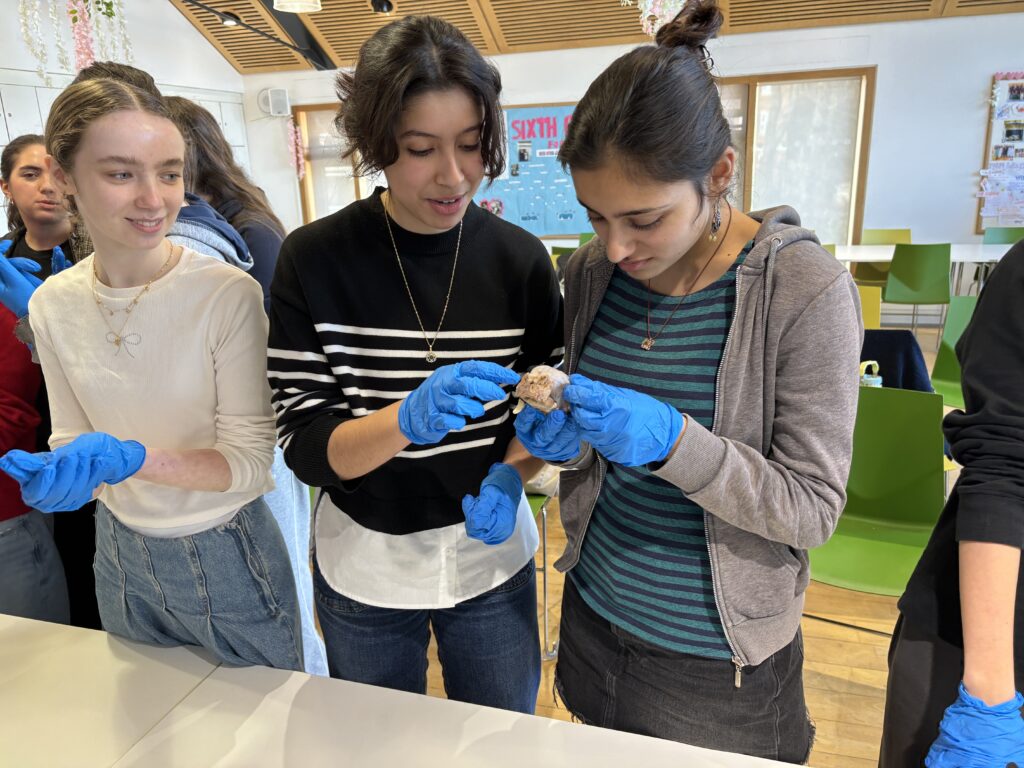
One of the highlights of the autumn term was the welcome return of Dr Guy Sutton for our annual Year 13 Brain Day. A leading authority in short-course neuroscience, Dr Sutton guided students through an immersive exploration of the brain, contemporary neuroscience and the rapidly developing field of human-computer interfacing.
Far more than an introductory overview, the sessions encouraged students to engage with some of the most exciting developments in current research, considering how emerging technologies may one day integrate with human neural pathways. Dr Sutton’s fascinating insights into the future of neurotechnology not only captivated our students but also highlighted the remarkable pace of scientific discovery.
The Distinguished Lecture Series
Continuing our commitment to extending learning beyond the classroom, the department was privileged to welcome two distinguished researchers to Channing, who delivered inspiring presentations to students, parents and colleagues from our partnership schools.
Professor Francesca Happé MBE
A leading researcher in autism, Professor Happé delivered a thoughtful and engaging overview of the history of autism research and the significant advances made in recent years. Particularly enlightening was her discussion of how our understanding of autism in girls has evolved, highlighting the historical under-diagnosis of girls and the different ways in which many develop coping strategies.
Professor Tali Sharot
Later in the year, Professor Tali Sharot explored the fascinating concept of the Optimism Bias and the ways in which this common cognitive tendency influences our decision-making. Her lecture drew an enthusiastic audience from both Psychology and Economics, demonstrating how cognitive biases can shape not only individual choices but also large-scale economic behaviour, including the events that contributed to the 2008 global financial crisis.
Student Voice and Independent Scholarship: Neuro Narratives
One of the department’s greatest strengths continues to be the opportunity for students to pursue their own intellectual interests. This year, our Year 12 and 13 psychologists once again produced further editions of the departmental magazine, Neuro Narratives.
Students independently researched and wrote articles on psychological topics that particularly interested them, resulting in an impressive range of subjects, from the psychological impact of family breakdown to the cognitive science behind procrastination. The finished publications beautifully showcase both the breadth of students’ interests and their flair for academic writing, making for genuinely thought-provoking reading.
Embracing the Future: Virtual Reality in Clinical Practice
Alongside these theoretical explorations, the department continues to embrace technological innovation that enriches students’ learning. This year, students moved beyond textbook descriptions of clinical interventions by using Virtual Reality (VR) headsets to explore the future of psychological therapy.
Through immersive simulations, students experienced how covert desensitisation and other forms of exposure therapy can be used to support people experiencing conditions such as acute social anxiety and specific phobias. By combining established psychological theory with emerging technology, students gained a deeper understanding of both the science underpinning these therapies and the exciting possibilities they offer for future clinical practice.
Looking Forward
Reflecting on the year, our students have once again demonstrated the curiosity, resilience and intellectual ambition that define Psychology at Channing. Through engaging with world-leading academics, embracing new technologies and producing independent scholarly work, they have shown themselves to be not only enthusiastic learners but also thoughtful future contributors to the field.