
 VISIT US
  CONTACT US
  SUPPORT US
 APPLY NOW
It has been an incredibly busy and productive year in Junior School Computing lessons. From our youngest learners discovering the fundamentals of technology to our oldest students building complex websites and digital tools, the classrooms have been buzzing with curiosity and innovation. Guided by a curriculum that carefully balances computer science, information technology and digital literacy, pupils across all year groups have significantly expanded their skill sets this academic year.
In Year 1, pupils were introduced to the basics of the technology around them. They learned to identify computers and their main parts, mastered different ways to use a mouse and discovered how to use a keyboard to type and edit text. They also took their first steps into programming by moving Beebot robots to build command sequences, explored data by labelling and counting objects and tried their hand at media creation with digital painting tools. Building on this foundation, Year 2 pupils expanded their perspective to explore information technology inside and beyond the school walls. They explored digital photography by experimenting with image editing tools, learned to compile data into pictograms whilst advancing their coding skills via ScratchJr robot algorithms and programmed Marty Robots to execute structured instruction sets.
Year 3 and 4 pupils made brilliant strides in understanding how data and systems operate. Year 3 took a deep dive into the inner workings of networks, investigating how digital devices communicate and share information safely. They also stepped into creative design through stop-frame animation and desktop publishing, while mastering sequential block-based coding. Meanwhile, Year 4 pupils explored the broader concepts of the Internet, learning to critically evaluate the reliability of information they encounter online. Their technical skills were put to the test in creative units covering audio production and digital photo editing, alongside data logging to observe information gathered over time.
In Upper Key Stage 2, the analytical challenges grew more sophisticated. Year 5 students focused on complex computing systems, discovering how search engines function, utilising databases to organise data and levelling up their coding logic from simple repetition to conditional selection scripts. Finally, Year 6 capped off their primary school computing journey with real-world applications. They explored advanced online communication platforms, applied complex mathematical formulas within spreadsheet data sets and structured functional web pages while adhering to image copyright laws. They also excelled in advanced block programming, successfully manipulating variables to create and improve interactive games, and coding controllable physical devices to sense movement using conditional statements.
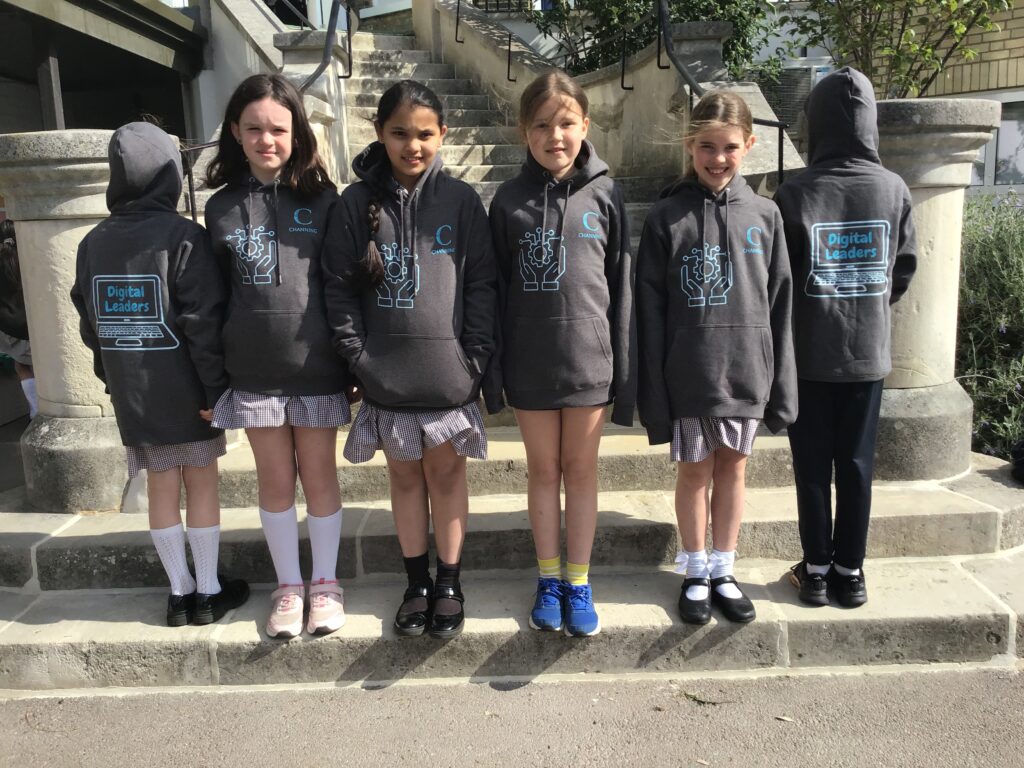
A major highlight of our calendar was Safer Internet Day, where our student-led Digital Leaders truly excelled. Recognising the rapid integration of emerging technologies into everyday life, the Digital Leaders collaborated to produce a highly informative, child-friendly video explaining Artificial Intelligence (AI). The video cleverly broke down how AI works and gave practical advice on how to navigate AI tools safely and responsibly, proving to be an exceptional resource shown across all year groups.
Beyond our core coding and creative modules, practical digital citizenship has been an ongoing priority. A significant focus across the entire Junior School this year—stretching all the way from Year 1 through to Year 6—was learning how to properly care for and maintain our physical school technology. Even our youngest learners actively participated in creating and following standard rules for using technology responsibly, which included safely shutting down systems, careful handling of hardware and appreciating the value of the infrastructure supporting their education. Ultimately, our pupils have not only proven themselves to be capable creators of technology this year, but also safe, respectful and highly conscientious digital citizens ready for the future.