 VISIT US
  CONTACT US
  SUPPORT US
 APPLY NOW
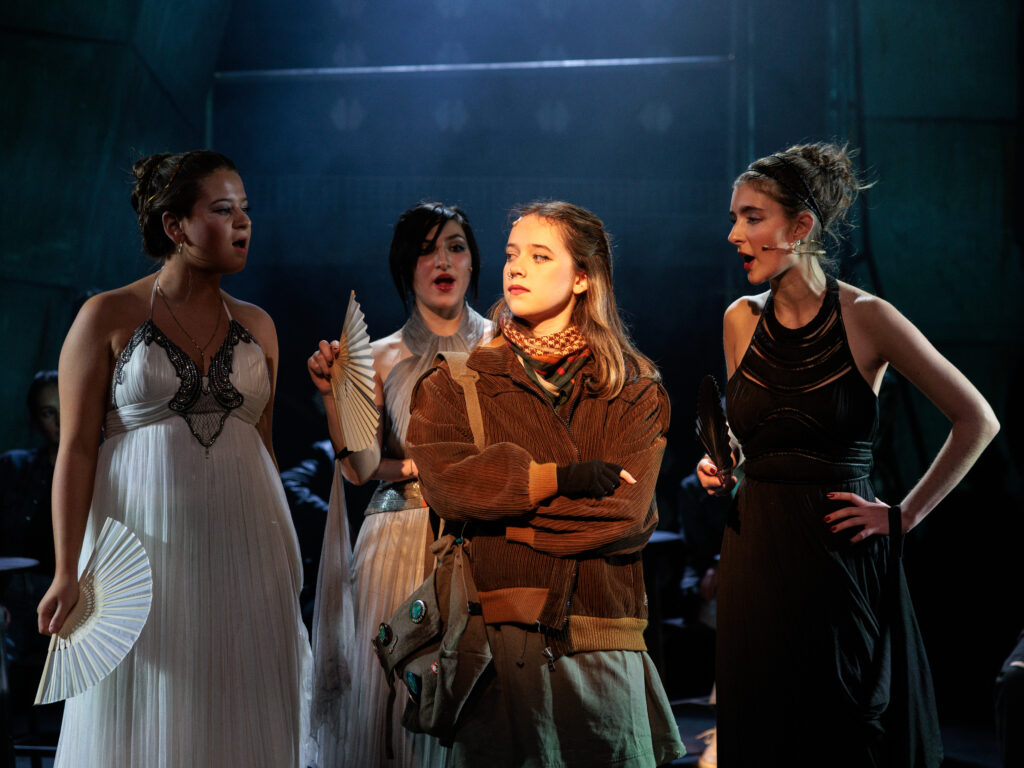
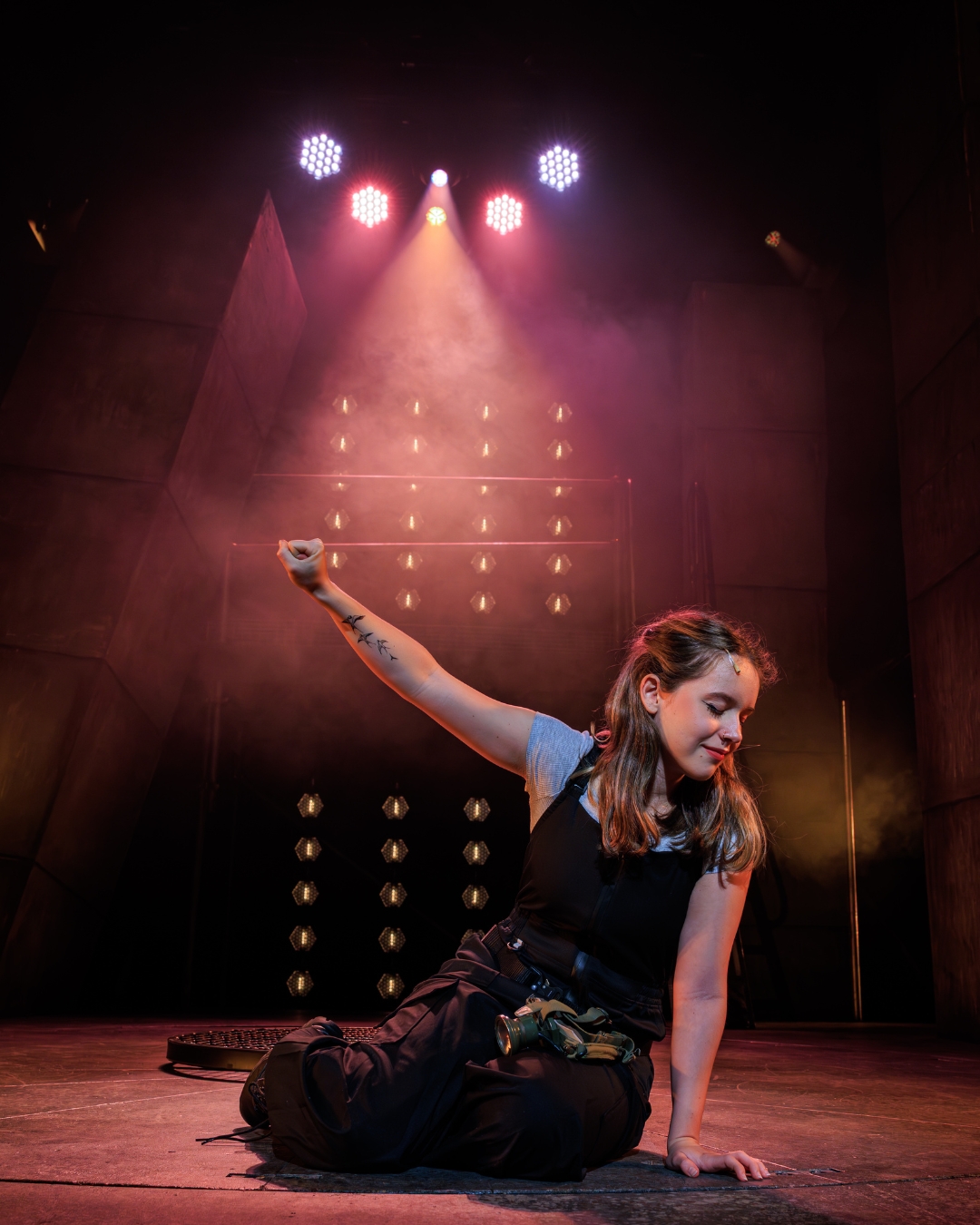
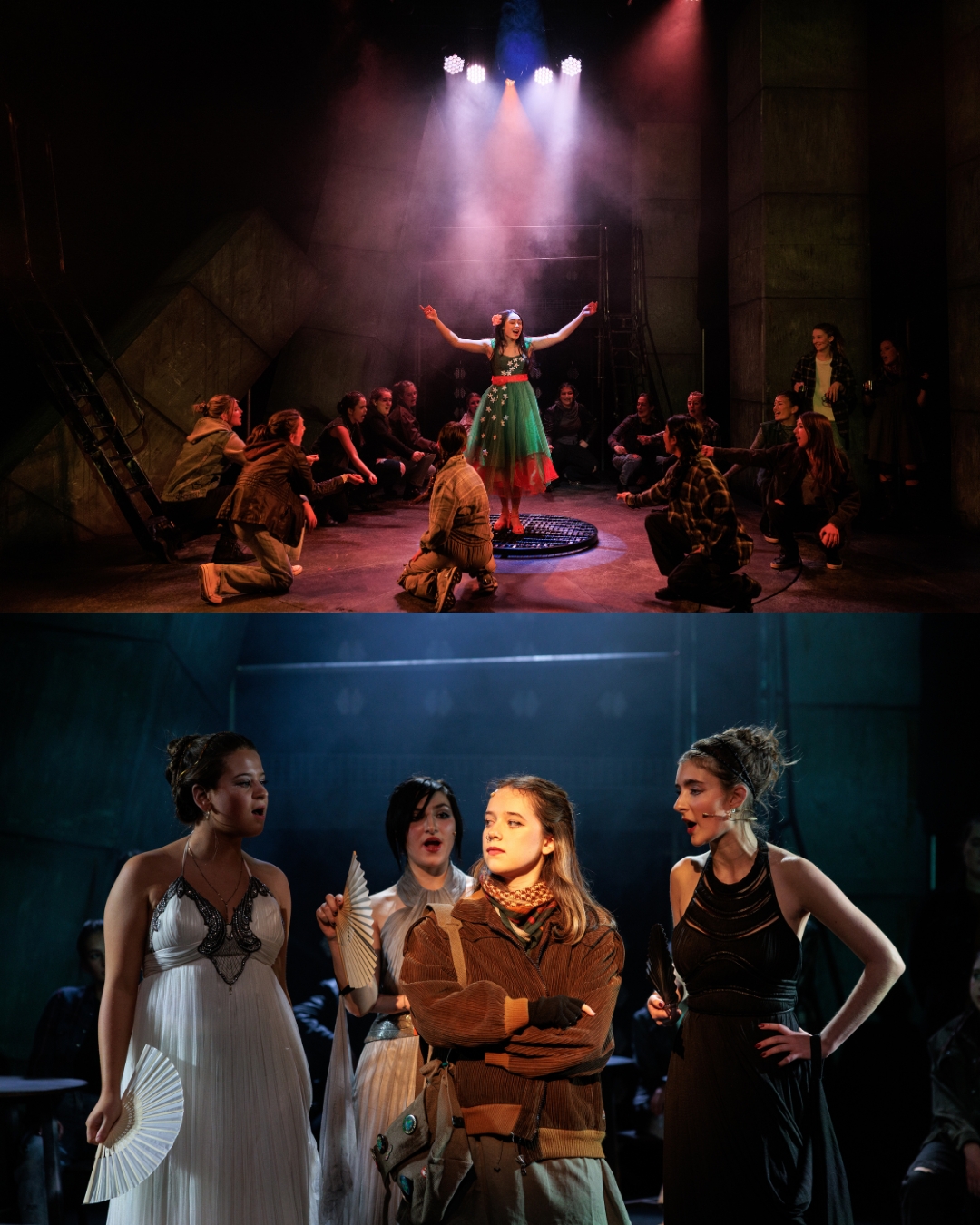
The Arundel Centre was electric last week as five packed performances of Hadestown unfolded—an ambitious, exhilarating production brought to life through the remarkable efforts of its cast, crew, and creative team. Under the inspired direction of Miss Hill and the expert musical leadership of Mr Boxall, this staging delivered a level of polish and emotional power to rival many professional West End shows. From soaring vocals to razor-sharp choreography and seamless technical execution, the production held audiences spellbound from start to finish.
Huge congratulations to Miss Hill and Mr Boxall for their fearless leadership and inspiration, and also to: Mrs Maliphant-Gray for her extraordinarily inventive design concept for set and costumes, which lent such impact to the production; to Rachel Angus, talented choreographer, for her complex and challenging routines which were so effective in highlighting the mood and themes of the show; to production manager Mr Maliphant-Gray for overseeing all the practical and logistical aspects of everything involved, from the first design principles and rehearsals to the final performance; to Miss Bacon and Miss Gordon for their vocal coaching which had such great effect; and to Miss Vince, Ms MacHugh and the rest of the staff for all their hard work and support.
The show was reviewed by the National School Theatre Awards:
Channing School: Hadestown – A Hell of a Show!
As an NSTA Representative, I was lucky enough to attend Channing School’s production of Hadestown on Thursday 27th November 2025. Directed with striking clarity and imagination by Ms. Jessica Hill – this production transported its audience from the familiar comfort of a school auditorium to the grit, glamour, and danger of Anaïs Mitchell’s mythic industrial underworld. With a cast led by Molly (Hermes), Anna (Orpheus), Bella (Eurydice), Anna (Hades), and Serrana (Persephone), the performance proved not only a testament to the talent within the school, but a model of how student theatre can approach complex material with boldness and emotional intelligence.
Hadestown retells the ancient Greek myth of Orpheus and Eurydice through a modern, folk-jazz lens, setting the story in a gritty, Depression-era industrial world. Orpheus, a hopeful young musician, falls deeply in love with Eurydice, but when poverty and hunger drive her to seek security in Hadestown (a factory-like underworld ruled by the powerful and possessive Hades), Orpheus resolves to rescue her with nothing but the strength of his music. His song moves even Hades to compassion, and the couple is allowed to leave on one condition: Orpheus must lead Eurydice back to the surface without turning to look at her. In a moment of doubt and fear, he looks back, losing her forever – an ending that underscores the fragility of hope and the enduring human desire to believe in love despite the odds. The 2019 Broadway run was critically acclaimed, earning 14 Tony nominations and winning 8, including Best Musical and Best Original Score.
From the opening bars, Mr Peter Boxall’s musical direction set the tone. The band captured the bluesy heartbeat of Mitchell’s score with surprising depth. Boxall managed both balance and restraint: rather than overwhelming the young performers, the orchestra supported them, allowing lyrics and character work to shine through. The tightness of rhythm during ensemble numbers like “Way Down Hadestown” and “Livin’ It Up on Top” revealed careful rehearsal and a strong musical sensibility at the helm.
As Hermes, Molly carried the show’s narrative weight with ease and charisma. Hermes is the unseen engine of Hadestown – guide, storyteller, and wry commentator – and Molly navigated these shifts with confidence. Her voice had a warm, assured timbre, and she demonstrated an impressive ability to control pacing, especially in moments where the story’s tone darkened. Molly’s connection to the audience was effortless; at times she felt less like a narrator and more like a guardian ushering us through a dangerous landscape.
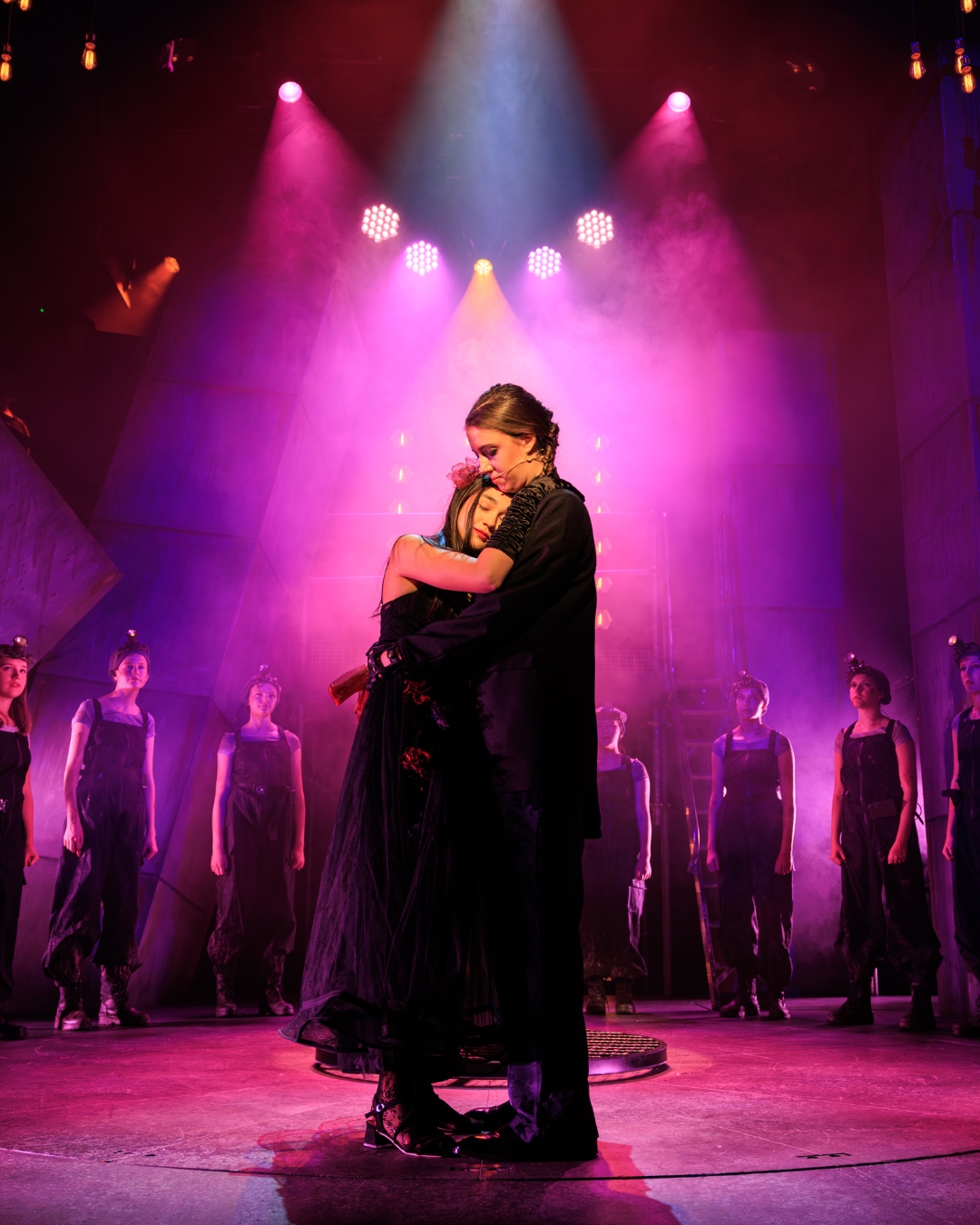
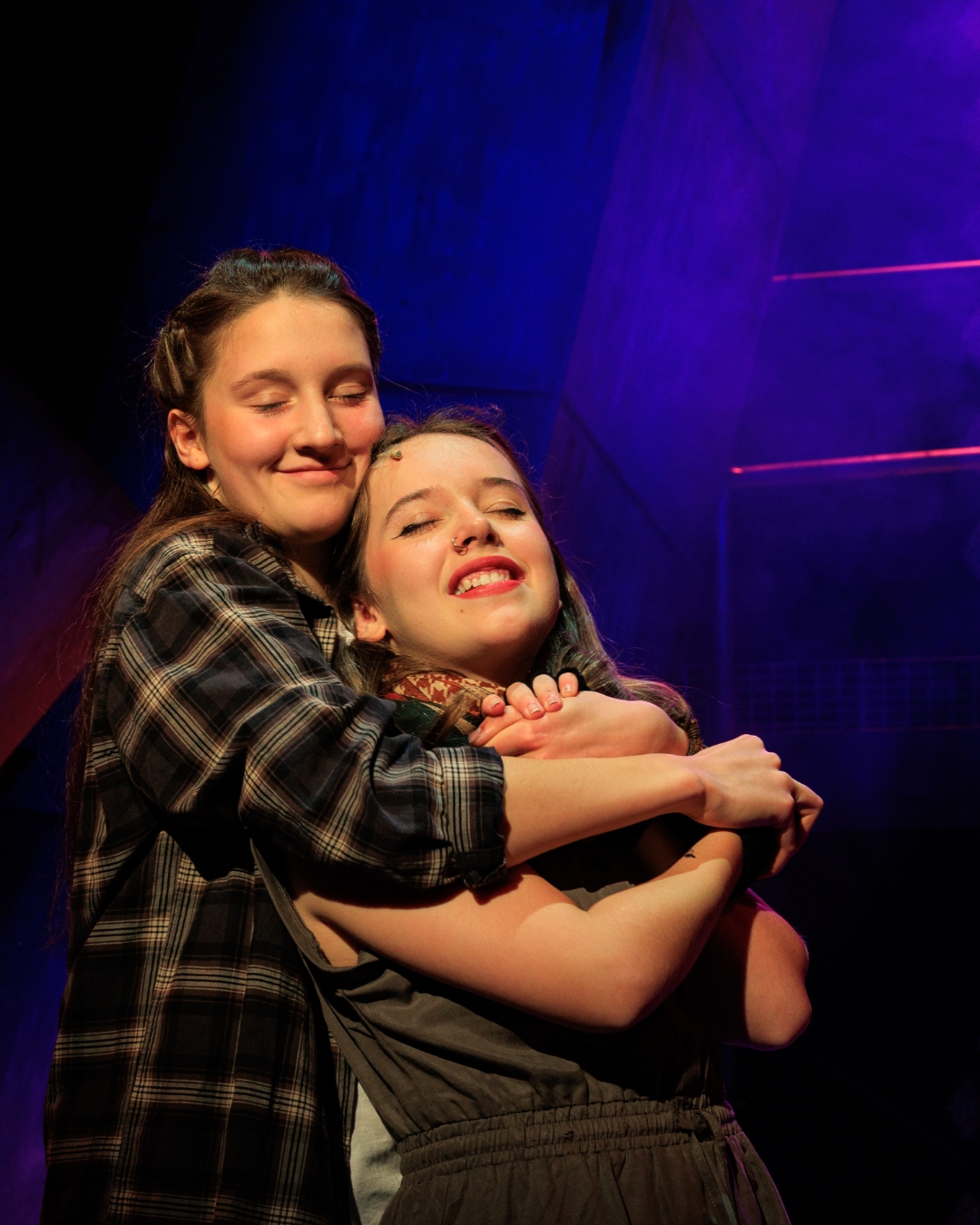
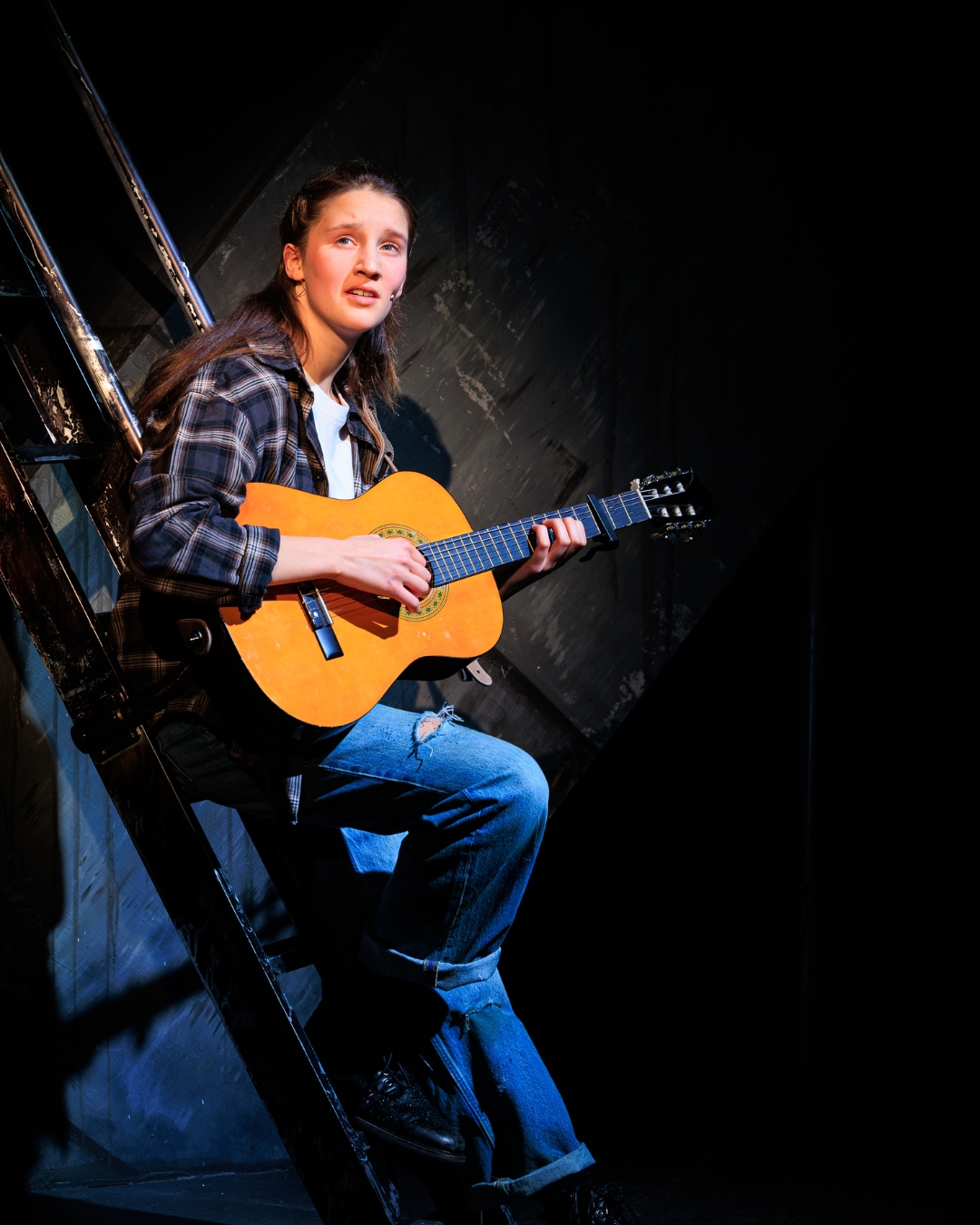
The emotional centre of the production rested on the relationship between Anna’s Orpheus and Bella’s Eurydice, and the duo delivered performances full of sincerity. Anna brought a delicate vulnerability to Orpheus – her voice soaring gently, if sometimes tentatively, through the character’s idealistic melodies. What stood out most was the earnestness of her interpretation: Orpheus appeared not as an untouchable mythic poet, but as a young dreamer struggling to grasp his own power. Bella’s Eurydice, by contrast, was grounded and pragmatic, her performance marked by clarity of intention. She portrayed Eurydice’s descent into Hadestown not as weakness but as a heartbreaking act of survival. Their duet “All I’ve Ever Known” was one of the production’s loveliest moments – quiet, believable, and deeply human.
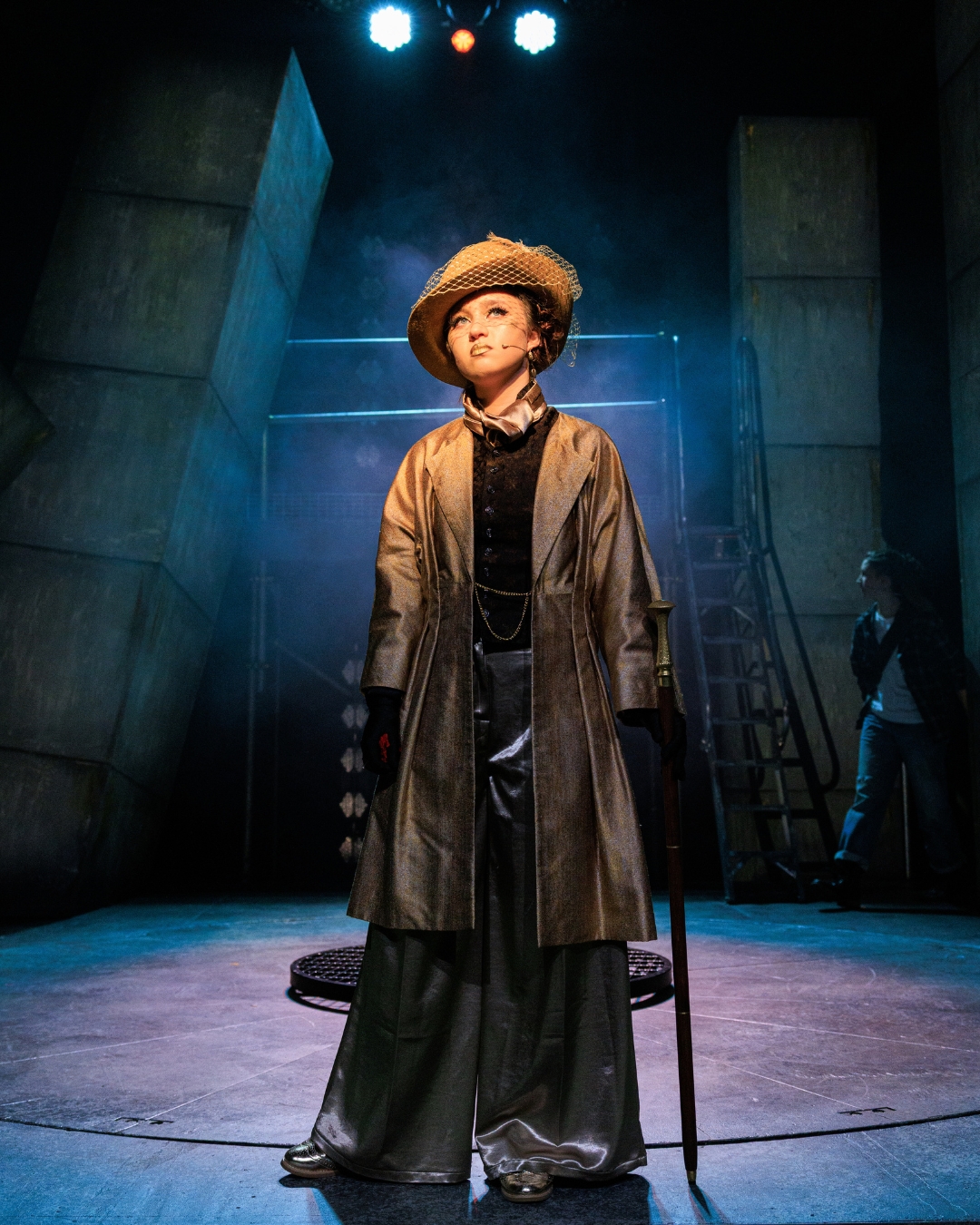
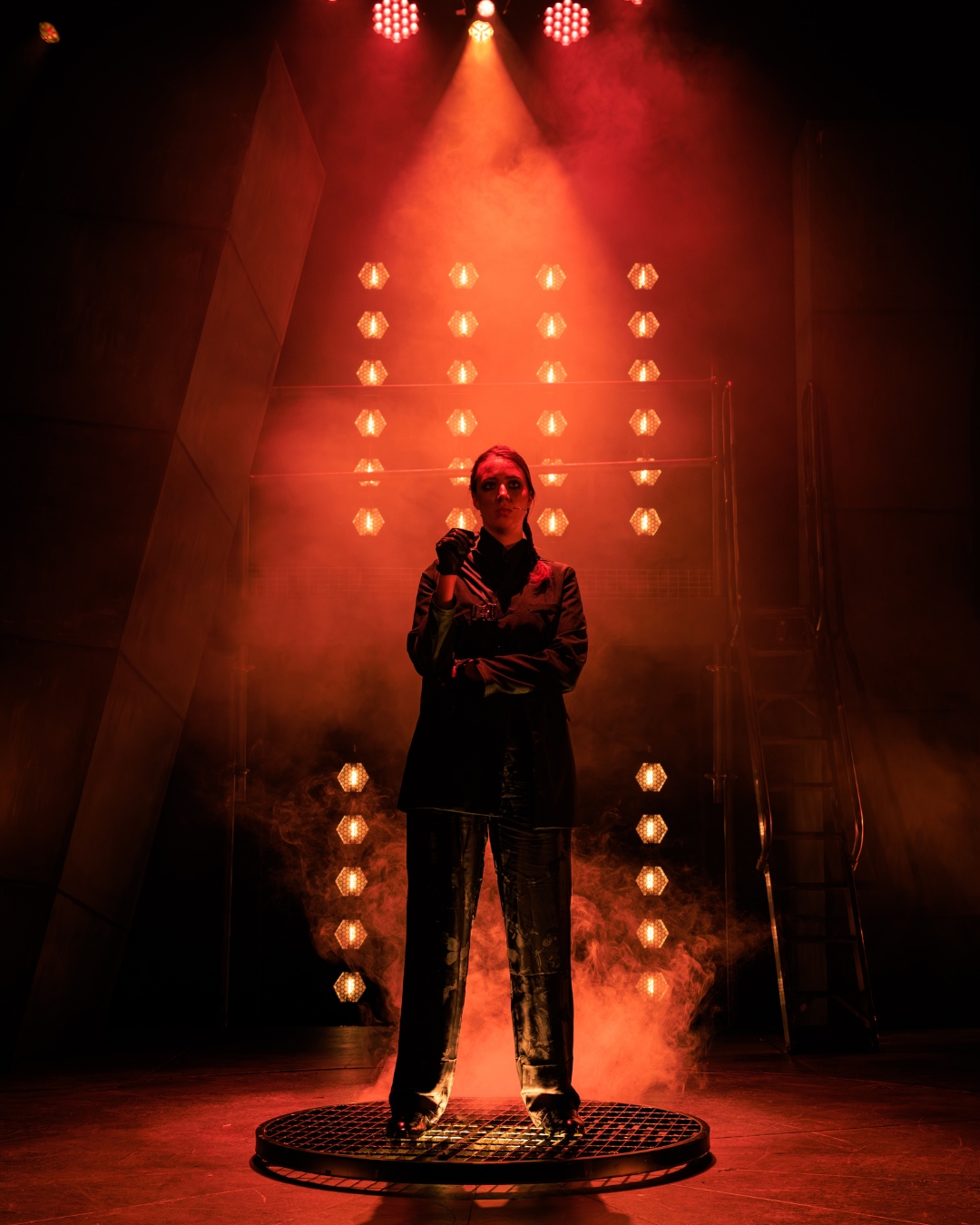
As Hades, Anna provided a chilling and comedic counterpoint. Her low, resonant voice cut cleanly through the ensemble, and she imbued the role with an authority and charm beyond her years. Anna played Hades with a calm, unsettling and at times comedic flair – the kind that suggests absolute control. Her scenes with the workers’ chorus created some of the show’s most atmospheric stage pictures, and her rendition of “Hey, Little Songbird” was delivered with a calculated, predatory charm that drew a collective intake of breath from the audience.
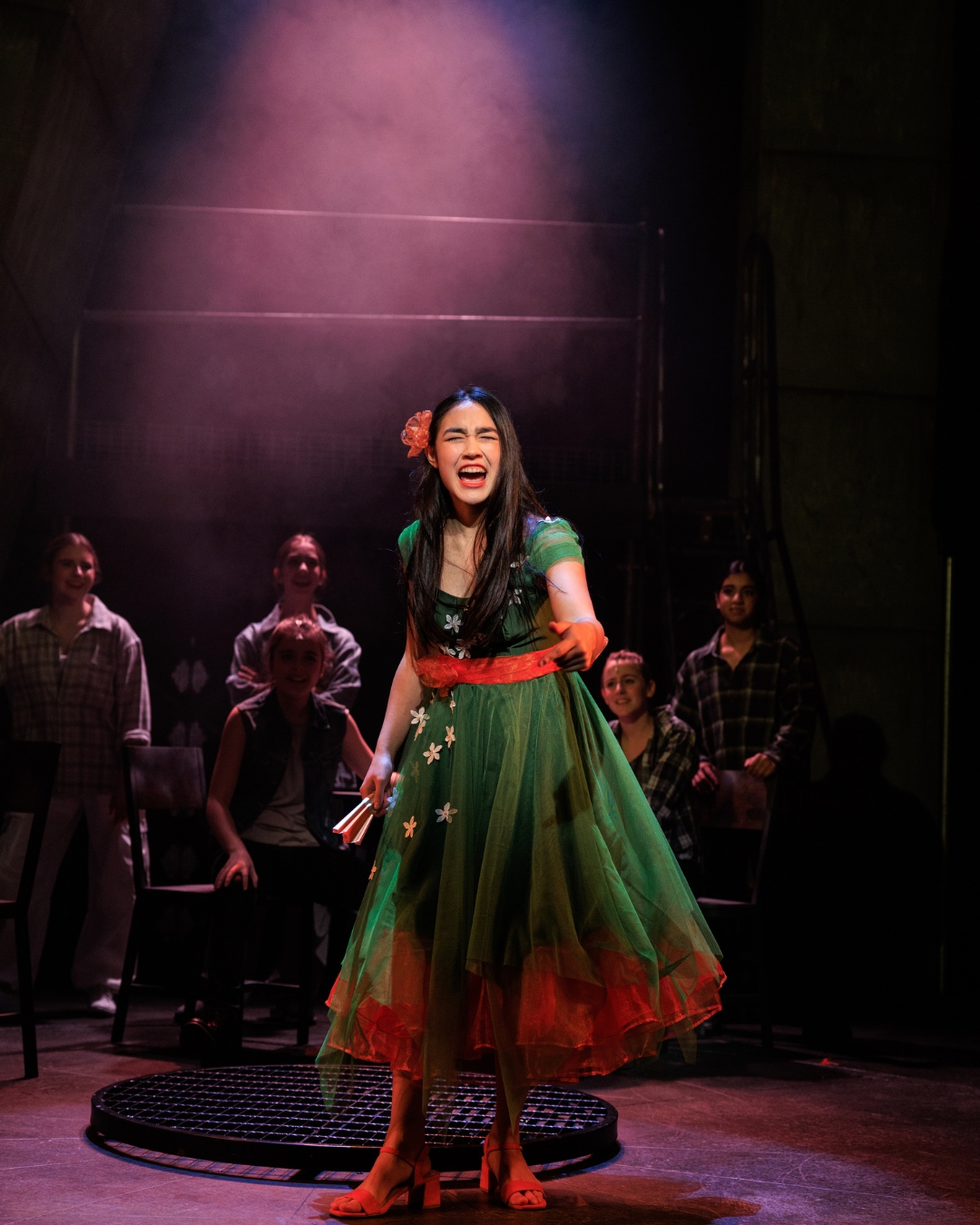
Balancing Hades’s shadow was Serrana’s Persephone, whose arrival in Act I injected much-needed brightness into the industrial gloom. Serrana played Persephone with warmth, wit, and an appealing sense of mischief, capturing both the goddess’s charisma and her underlying exhaustion. Her energy lifted every scene she entered, especially during the revelrous “Livin’ It Up on Top,” where her dynamic presence gave the number a celebratory sparkle.
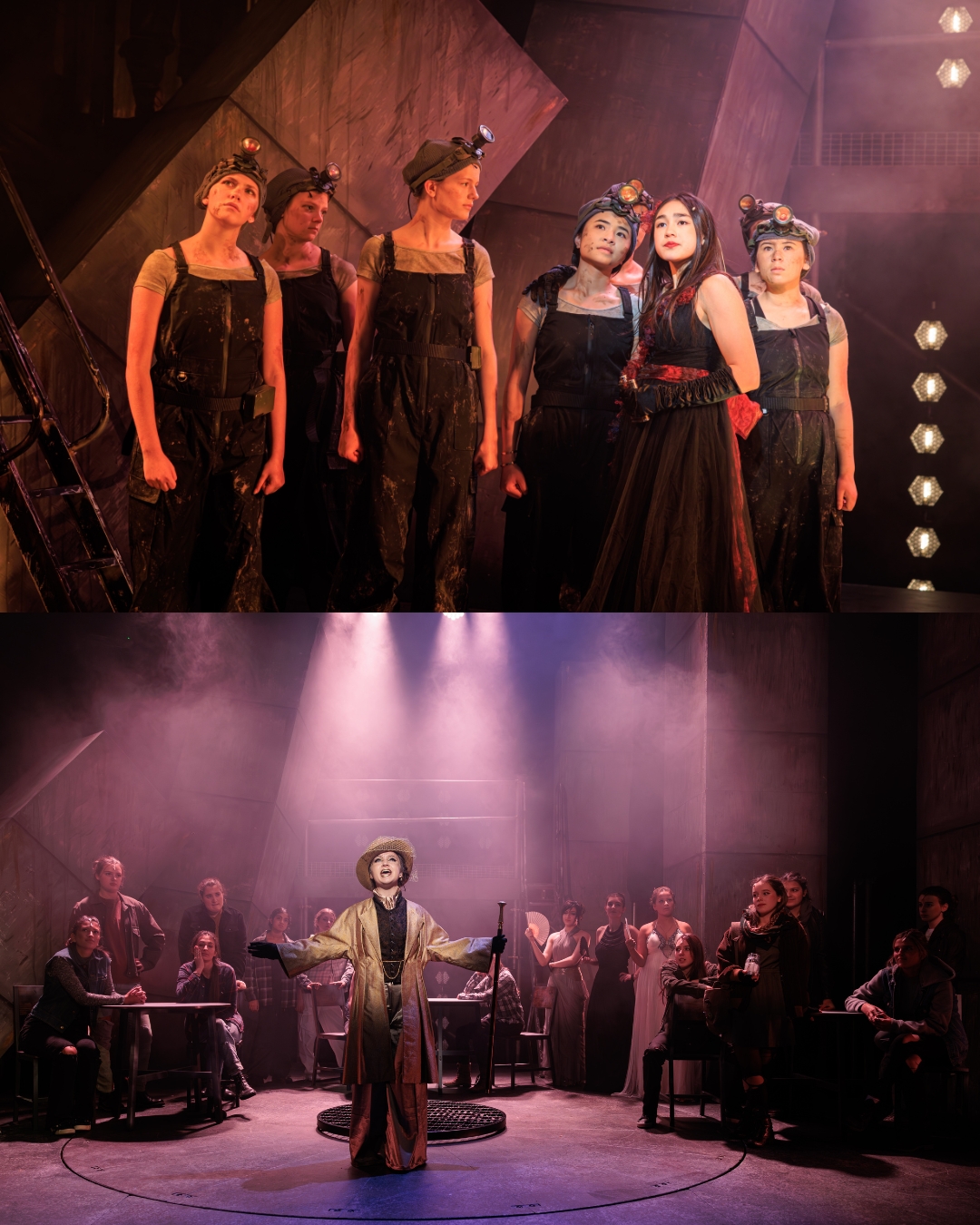
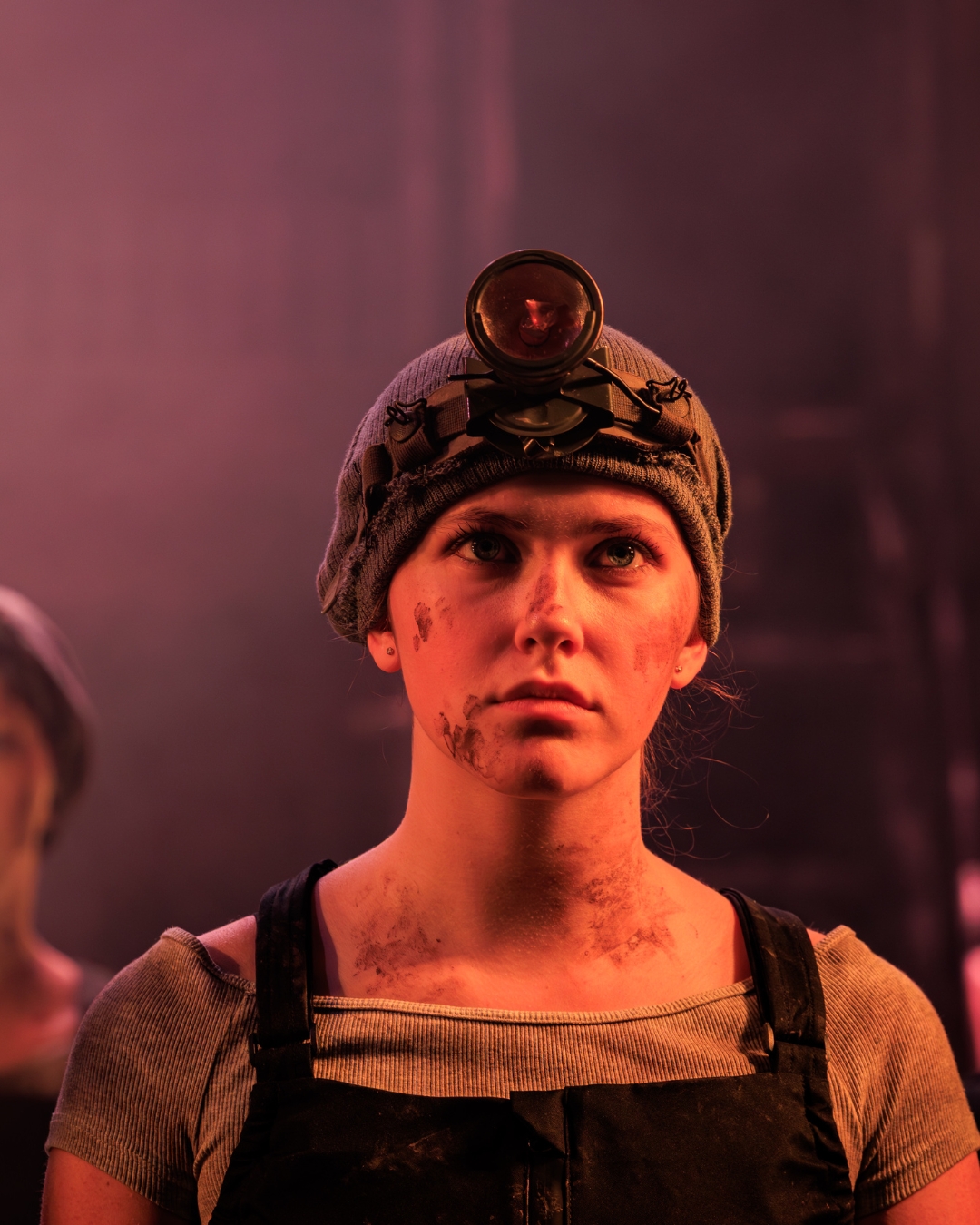
Director Jessica Hill’s staging made smart use of limited space, relying on movement, lighting shifts, and spatial levels to evoke the worlds above and below. Ensemble choreography was effective, and Hill’s attention to transitions gave the production a fluid, almost cinematic rhythm. The workers’ chorus deserves particular recognition for the vital role they played in realising this vision. Functioning as the relentless heartbeat of the underworld, the ensemble movement was well synchronised, their vocal work was equally strong, and each performer demonstrated thoughtful characterisation. Collectively, the chorus built a sense of oppressive routine and communal struggle, reinforcing the musical’s themes while elevating every scene in which they appeared.
The costume design was another thoughtfully executed element of the production, offering visual clarity and strong character distinction without ever overwhelming the storytelling. Each costume felt carefully considered and wholly appropriate for its wearer: the workers’ muted, worn fabrics evoked the exhaustion of life in Hadestown, while Persephone’s brighter, looser garments captured her fractured joy and fading warmth. Orpheus and Eurydice were dressed with subtle contrasts; his lighter, softer tones reflecting idealism and artistic purity, hers earthier and more practical, hinting at her constant negotiation between hope and survival. Hades’s dark, structured costume created an imposing silhouette that underlined his authority and cold control.
Channing School’s Hadestown succeeded not only as a retelling of a timeless myth but as a showcase of emerging talent nurtured by thoughtful direction and musical leadership. It was a production full of heart, ambition, and surprising maturity – proof that even in the depths of the underworld, there is always room for light.