
 VISIT US
  CONTACT US
  SUPPORT US
 APPLY NOW
Listen on:
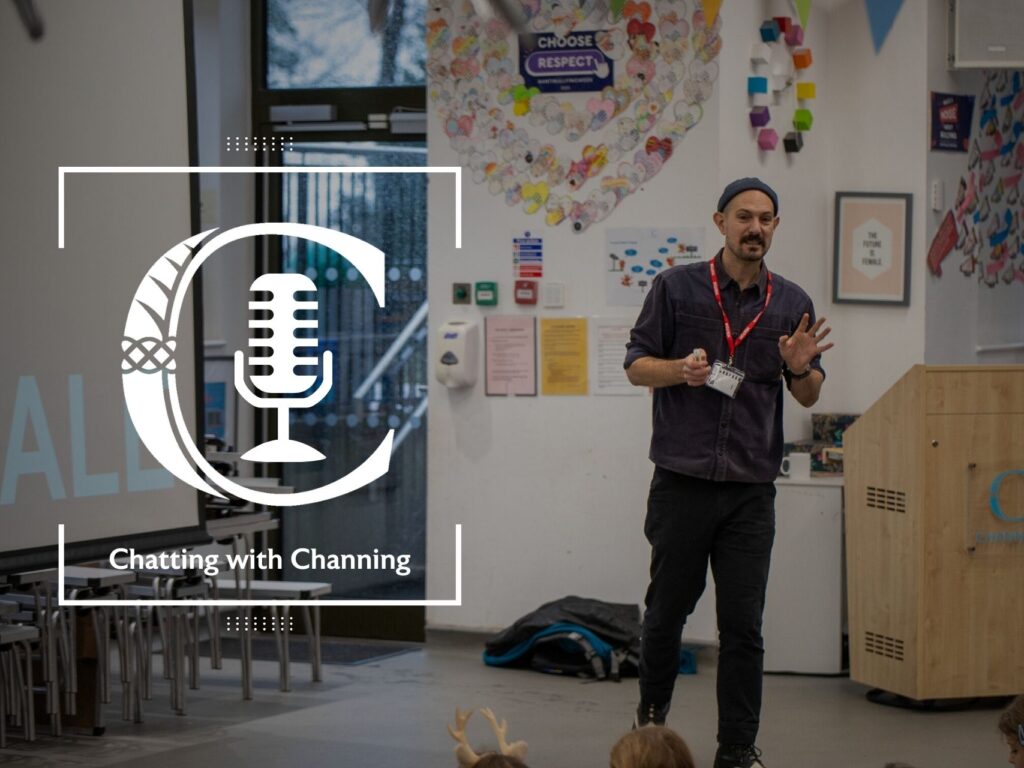
In the latest episode of Chatting with Channing, we are delighted to welcome Dr Russell Arnott, an ocean scientist, educator, and passionate advocate for science communication. Interviewed by our student leaders Lucia and Lara, this episode offers a fascinating insight into marine science, climate change, and the many different paths a career in science can take.
Dr Arnott holds a degree and a Master’s in Oceanography, and his career journey is anything but conventional. He began working as a survey oceanographer before retraining as a science teacher, eventually becoming Head of Physics. During his time in the classroom, he developed a strong belief that science should be engaging, accessible, and inspiring — something students talk about long after the lesson ends. This passion for sharing science beyond the classroom later led him to leave teaching and found Incredible Oceans, an organisation dedicated to educating as many people as possible about the importance of the ocean and the challenges it faces.
Driven by curiosity, Dr Arnott returned to academia to complete a PhD in phytoplankton dynamics at the University of Bath. In the episode, he explains why phytoplankton — microscopic plants that form the base of the ocean food chain — are vital to life on Earth, and how changes in ocean conditions caused by climate change can have far-reaching consequences for marine ecosystems and the planet as a whole.
His research career has taken him to some of the most extreme environments on Earth, from conducting experiments beneath Arctic ice to working in the stormy Southern Ocean. He has worked at the University of Cambridge and is currently an Associate Lecturer in Ocean Science at the University of Exeter, as well as teaching on Falmouth University’s Marine & Natural History Photography course.
Throughout the conversation, Dr Arnott also offers honest and thoughtful advice for students interested in science. He speaks openly about the importance of real-world experience, the growing role of coding and data in modern science, and alternative pathways such as science communication and public engagement for those who love science but may not thrive in traditional academic routes.