 VISIT US
  CONTACT US
  SUPPORT US
 APPLY NOW
Word from the Head – 16 January 2026
Dear Parents,
If your child came home on Tuesday talking about ‘Dukkha’, ‘contagious goodness’ or why their New Year’s resolutions might already be failing, that makes me very happy: it means they were listening to the assembly I gave that morning!
January can be a heavy month for us. The holiday sparkle has faded, the mornings are dark, and the pressure of ‘New Year, New Me’ often leads to a cycle of self-criticism. You already know from last week’s Word from the Head and Friday assembly what I think about those. Last week I asked the girls to think about how we can make goodness contagious. Following on from that, on Tuesday I explored another aspect of Rutger Bregman’s Reith Lectures, focusing on his suggestion that we admire the wrong things and the wrong people. My argument was that this is why so many of us feel the dissatisfaction of the January Blues, and I explored how different world philosophies offer a way out of the trap of wanting more.
I started by asking the students to score their moods. It is no secret that many people feel a bit down or fed up at this time of year. I discussed the Buddhist concept of Dukkha – the idea that much of our suffering comes from a constant state of craving. We crave the summer sunshine; another holiday, the ability to eat tasty treats, regardless of the calories; money to spend. Maybe we want the life of luxury we admire in celebrities, but achieved without effort. Our culture often teaches children that happiness is something to be acquired.
But as I shared with them, a life spent wanting is a life that struggles to find deep satisfaction. I pointed to research from the American Freshman Survey which shows a startling shift: 50 years ago, most students prioritised finding a meaningful philosophy of life. Today, the vast majority say that getting rich is what matters most. As parents, you see this pressure firsthand. Our children are bombarded with images of material wealth: as Rutger Bregman put it, the wrong things and people to admire, leading to the feeling that no matter what they have, it’s not quite enough.
To help the students navigate these feelings, I looked at how various faiths and philosophies tackle dissatisfaction:
- Islam (Qana’ah): The practice of contentment. The Prophet Muhammad (PBUH) suggested looking at those who have less to cultivate gratitude (Shukr).
- Christianity: The belief that, as St Augustine wrote, “our heart is restless” until it finds a higher purpose beyond material things.
- Hinduism (Maya): The idea that material pursuits are often a “mirage,” and true satisfaction comes from realising our inner worth.
- Judaism (Tikkun Olam): The powerful idea of “repairing the world.” Dissatisfaction isn’t a signal to buy something; it’s a call to do something – a “mitzvah” or good deed.
The core message I want the students to take away is this fabulous line from Rutger Bregman: “People don’t do good things because they are good people; they become good people by doing good things”. I want to move our students away from the moral exhaustion of New Year’s resolutions that focus on their flaws. Instead, I am challenging them to start a moral revolution. By shifting the focus from what we want to what we can give, I believe they can find a version of happiness that doesn’t melt away when the holidays end.
If you’ve been inspired by these ideas, here are some suggestions for conversations you might have at home:
- Reframe ‘The Blues’
If your child is feeling fed up, tell them that’s OK. Remind them that January is a low-energy month for many people. Instead of asking ‘What’s wrong?’, perhaps try asking: ‘On a scale of 1 to 10, where is your mood today? What would move it just one point higher?’.
- Focus on being over having
When your child expresses a desire for a new possession or expresses envy for a perfect lifestyle they have seen online, explore the feeling behind it. You might ask: ‘What do you think that item would make you feel? Is there another way we can find that feeling?’. You might also ask whether they think what they have seen in their Insta or TikTok feed reflects entirely accurately how that person lives every day.
- Contagious Goodness
Last Friday I encouraged the girls to make goodness contagious. You could challenge them to do a small act of kindness – not for a reward, but as an experiment. Ask them what they did and how it made them feel.
- Discuss what true wealth really looks like
I shared a thought with the students that I hope stays with them: “Someone who lives without any kindness or love in their life is experiencing a form of poverty.” You might ask your child what they think true wealth looks like, beyond a bank account.
As we move through this year, I want to help our children realise that true contentment isn’t something they buy or a resolution they keep for two weeks – it’s a habit of goodness we can all build together.
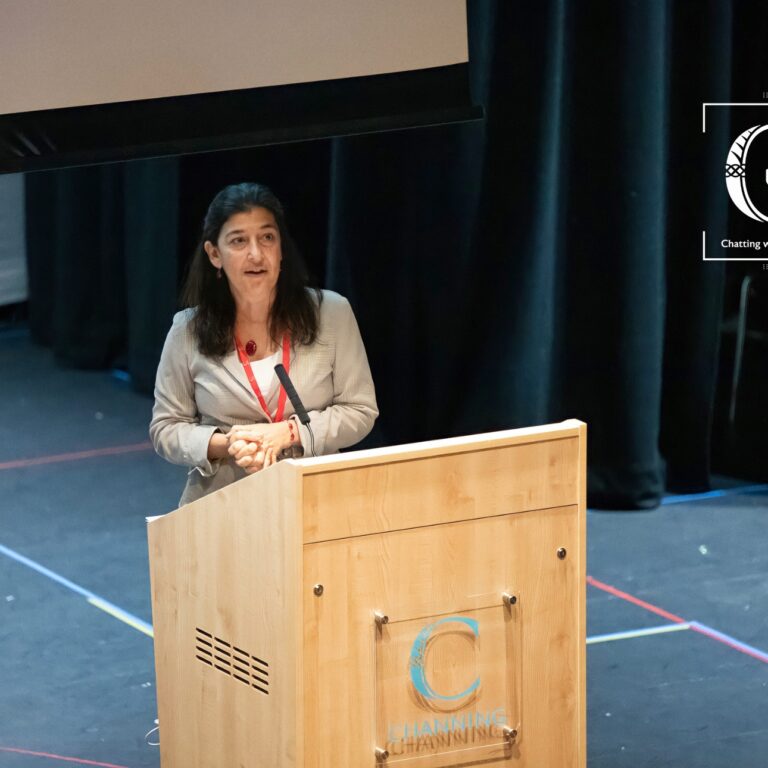
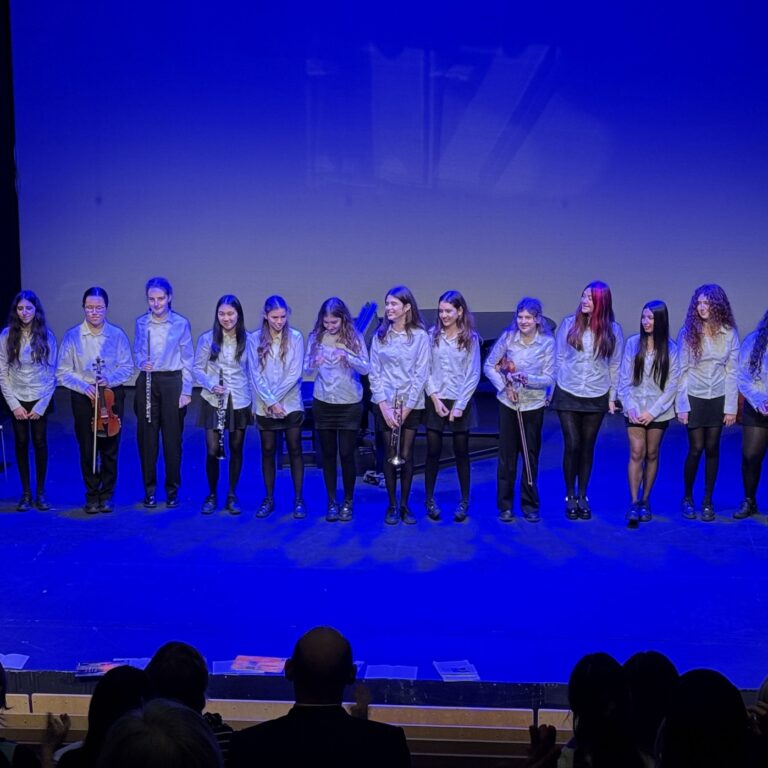
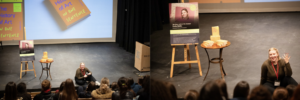
That goodness is already evident in school, where this week all our clubs and societies have been up and running for the new term and it has been lovely to see the girls working together in their chosen spheres. In the Senior School the Year 7 & 8 Summer Production has been announced and I am looking forward to seeing James and the Giant Peach in June! We’ve had an extraordinary range of speakers in school, inspiring the girls in Psychology (Professor Tali Sharot), History of Art (Verity Babb) and creative writing (author Lucy Strange). Wednesday’s History conference on Global Conflicts was the pièce de résistance, with six historians joining GCSE and A level historians from Channing and three other local schools to explore the conflicts of the 20th century they are studying. The final speaker of the day was Richard Overy, outlining the arguments of his latest book, Why War?. It was a remarkable talk from one of the world’s most respected historians and a privilege to get to hear him speak.
We’re looking forward to seeing Year 11 parents (and girls) at the A level options evening next Thursday, 22 January, at which we will talk you through the finer details of making those choices. A reminder also that the Channing Association’s second-hand uniform sale takes place on Wednesday next week from 4-5pm in the Dining Hall – please see details below.
Finally, the eagle-eyed among you noticed a mistake in last week’s version of our useful Who should I contact 2025-26.pdf document: it has been updated on the Parent Portal and here it is again for ease of reference.
With warmest wishes for the weekend,
Lindsey Hughes
Headmistress