 VISIT US
  CONTACT US
  SUPPORT US
 APPLY NOW
Word from the Head – 9 January 2026
Dear Parents,
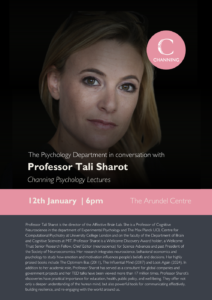
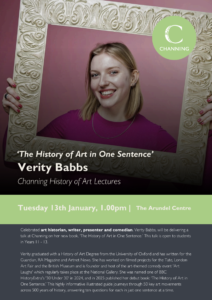
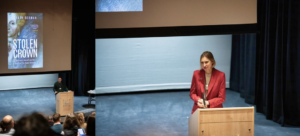
Happy New Year! I hope that you have had a wonderful break and are entering 2026 feeling rested and ready for the year ahead. Here at Channing it has been straight into the busy-ness of term: our first residential trip of 2026 has already taken place, with our Year 10 German students spending a week exploring Vienna under the auspices of the Austrian embassy. We’ve also had our first external speaker, with a fantastic lecture from historian Professor Tracy Borman last night on the Elizabethan Succession. There are not one but three speaker events next week – we are certainly kicking off the new year in style!
It’s quite the contrast to my first year as Headmistress here at Channing, when we started the Spring term of January 2021 in lockdown once again. My first assembly of term was delivered as a video, in which I talked about the difficulties of making New Year’s resolutions. They are by definition about attempting to turn over a new leaf, to make new starts. The problem is that new starts are not easy. Those of you who were reading Word from the Head back in January 2021 may remember both my failed attempt to complete Couch to 5K and – inspired by the genius of Bill Watterson in Calvin & Hobbes – why I think New Year’s resolutions are a bad idea:

A new start suggests that there is something to put right or to improve, some area in which we may have fallen short before. At first, we might have a lot of enthusiasm and be encouraged by small successes. However, as time goes on, we can forget to keep up our new endeavour so that, before we know it, we have given up. Indeed, research suggests that the vast majority of resolutions made at midnight on New Year’s Eve will have been broken by 13 January, which can lead to feelings of failure for having not managed to achieve whatever was desired. Then we beat ourselves up for being failures, which is even more counter-productive.
That’s not to denigrate making these resolutions, though. As I said back in 2021, the best thing about new starts is that there is no limit to the number of them you can have, so if you don’t manage to keep to your initial goal it doesn’t matter: we can get over it, and start again on something new. The most important thing is to forgive yourself if you slip, and have the resilience to try again.
This year, however, I suggested to the girls in assembly this morning that they might try something different. Instead of making a New Year’s resolution, why not carry on a positive habit from last year? Maybe we don’t need to reinvent ourselves every January. This insight came to me whilst listening to Dutch historian Rutger Bregman, co-founder of The School for Moral Ambition, giving the 2025 Reith Lectures. The Reith Lectures were inaugurated in 1948 by the BBC to mark the historic contribution made to public service broadcasting by Sir John (later Lord) Reith, the corporation’s first Director-General. John Reith maintained that broadcasting should be a public service which enriches the intellectual and cultural life of the nation. It is in this spirit that the BBC each year invites a leading figure to deliver a series of lectures to advance public understanding and debate about significant issues of contemporary interest.
Rutger Bregman gave a series of lectures entitled Moral Revolution, taking inspiration from American cultural anthropologist Margaret Mead’s aphorism, “Never doubt that a small group of thoughtful, committed citizens can change the world. Indeed, it is the only thing that ever has.” In the second of his four talks, Bregman focused on how a small group of British men, led by William Wilberforce, started a movement which ended in the abolition of slavery. You may know that the Unitarians were also abolitionists, and William Ellery Channing himself wrote one of his most famous treatises, Slavery, in 1835. Thus this section really caught my attention:
The abolitionists were a small band of renegades, Quakers and evangelicals, who didn’t just take on the slave trade. They set out to spark a wider moral revolution. Wilberforce, for example, wouldn’t have described his life’s mission as fighting slavery. For him, abolitionism was a part of something bigger, the attempt to make goodness fashionable.
But how do you bring about a cultural revolution like that? Their answer was simple, by practising what you preach, by pledging yourself to a worthy cause. Remember, people don’t do good things because they’re good people. They become good people by doing good things, even when they initially may act out of vanity. The latter is only human nature. We all crave recognition. Most of us want to be seen and admired. But in our society today, we admire the wrong things and the wrong people. What the British abolitionists taught me is that it is possible to rewrite a nation’s honour code, to make a different kind of ambition go viral, to make goodness contagious.
I love the idea of ‘making goodness fashionable’. This was the core of my assembly message this morning: “Remember, people don’t do good things because they’re good people. They become good people by doing good things.” We can “make goodness contagious” – here at school, and in the wider world – by the way we behave. I encouraged the girls to think about how they might build on what they already know about how to be kind, and how to live the Channing Promise every day in 2026, rather than perhaps making a lofty new resolution that they might find harder to keep up.
On the theme of looking for ways to improve, but not quite a New Year’s resolution, we continually seek to develop the educational experience we offer and to ensure we best meet the needs of our pupils and their families, as any successful school should. To this end, you will shortly receive a letter with a link to the Channing Parent Survey. Please look out for the survey link when it comes and thank you in advance for completing it. The survey is run by an independent third-party advisor and is entirely anonymous (unless you want us to follow up specific issues with you). I look forward to reading your candid feedback about the school. I am sure it will prove invaluable as we look ahead to the future and continue to refine our plans for the next 5-10 years.
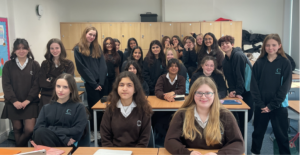
One of the most exciting parts of this week was meeting the girls who will be our pupils for those 5-10 years. On Tuesday we held our annual 11+ interview day and the 4+ assessment process has been taking place all week: it has been lovely to see some of you there with your younger daughters. My thanks to all the staff on both sides of the hill for their care and consideration in making this process as enjoyable and stress-free as possible for the girls (and their parents!). We look forward to making offers in due course, and welcoming our Class of 2033 and – incredibly – Class of 2040 into the school in September.
Finally this week I have some new internal appointments to share and new staff to introduce. With Miss Della-Porta’s departure at Christmas, I am delighted to announce that Ms Garrill will move up from Year 7 to take over as Head of Year 10. Miss Williams, Second in Maths and experienced Year 7 form tutor, is stepping up to become Head of Year 7. In addition Ms Yun becomes our Acting Exams Officer. Our congratulations to all three of them on their new roles. As a result of these changes Mr Rees joins us in the Maths department to teach Miss Williams and Ms Yun’s classes, while Mr Sim joins the PE department to cover Miss Della-Porta’s teaching.
Sadly we also have some temporary staff absences to cover, coincidentally all for a variety of limb injuries. Mr Jackson will be providing cover in the RPE department until Mr Iberi returns from knee surgery and in Classics while Miss Walker’s broken ankle starts to mend. I am also sorry to report that Mr Holmes has broken his arm and some ribs in a fall on the ice this week. Ms Sequeira and Mr Grossman are covering his lessons for now and there will be more information to come when we know more about his prognosis.
With all of these changes we have updated the useful Who should I contact – 2025:26 .pdf document, which you can also find on the Parent Portal and which should be your first port of call when you need to get in touch with us.
As always when I write Word from the Head, I hope that the ideas I share might spark a conversation at home. I certainly hope you’ll be inspired to talk about how to make happiness contagious! You may already have discussed your New Year’s resolutions as a family. Whether you’ve never made one or broken it already, whether you’re still going strong with Dry January or have instead opted for Ginuary, decided to get to the gym every day or are happily ensconced with the last of the Christmas chocolates, I wish you and those you care about a happy New Year and all good things for 2026.
With warmest wishes
Lindsey Hughes
Headmistress