 VISIT US
  CONTACT US
  SUPPORT US
 APPLY NOW
Word from the Head – 13 March 2026
Dear Parents,
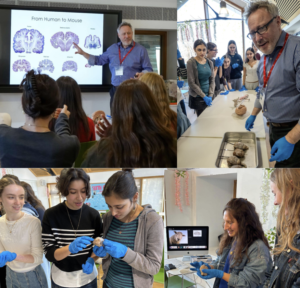
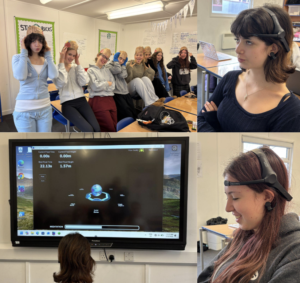
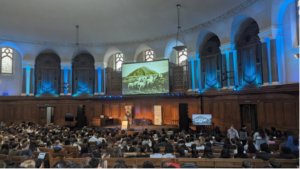
This week, Channing has been alive with the spirit of inquiry as we officially launched STEM Week. The theme for this year is one that sits at the very heart of a Channing education: Curiosity.
We often define curiosity as the eager, intrinsic desire to seek new information and experiences. But as our pupils have demonstrated through their wonderful presentations this week, curiosity is more than just an interest; it is the spark that transforms a mistake or an accident into a breakthrough that changes the world.
Our STEM leaders shared several fascinating stories where simple curiosity turned unexpected results into global innovations. We heard about Oskar Minkowski and Joseph von Mering, who, while researching digestion in the 1880s, noticed flies gathering around a dog’s urine after its pancreas had been removed. Rather than ignoring this minor detail, their curiosity led them to discover the link between the pancreas and diabetes, laying the foundation for the life-saving discovery of insulin by Banting and Best in 1921.
Similarly, we learned how Percy Spencer noticed a chocolate bar melting in his pocket while working on radar technology. His curiosity led him to test popcorn kernels and eggs near a magnetron, eventually giving us the microwave oven.
You might also be interested to learn that researchers at the Kyoto Institute of Technology discovered bacteria near a recycling plant that had evolved to produce a special enzyme. This enzyme can actually digest PET plastic, the material used in our water bottles, breaking it down into chemical pieces that the bacteria use for energy. It offers a truly sustainable hope for a future where plastic pollution is reduced and resources are reused.
However, the examples also beg the question how many important discoveries were missed due to the traditional male domination of STEM subjects? We can only imagine what might have been if the girls and women of the past had enjoyed the same support and encouragement to be curious as their male counterparts, rather than being dismissed or not taken seriously.
The message to the school was clear: when we ask Why did that happen? instead of simply claiming That shouldn’t have happened, we open the door to progress. As our pupils so eloquently put it, curiosity is the engine of STEM subjects (and arguably for any and all subjects) for three key reasons:
- It leads to questions: It moves us from passive observation to active inquiry. How does this work? What happens if I change this?
- It drives problem-solving: curious minds do not just accept the status quo; they look for ways to fix, improve, and create.
- It encourages resilience: STEM is built on trial and error. Curiosity provides the motivation to try again when an experiment fails and to explore a different path.
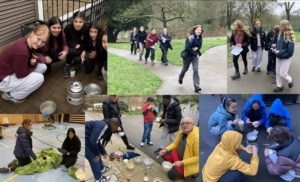
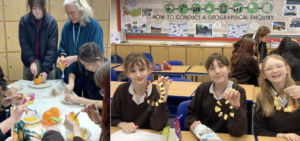
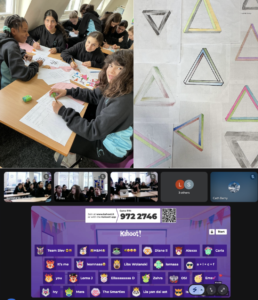
For the rest of the week, the school was buzzing with STEM challenges. Our Year 7 and 8 pupils were busy collecting stamps in their STEM Passports, while students across all year groups were participating in the Lanyard Quest. This particular challenge required a keen eye and a mathematical mind, as pupils tracked down 24 teachers wearing chemical symbols to calculate the sum of their atomic numbers.
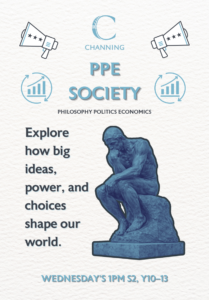
I am also delighted to announce the expansion of our STEM Society. It is now open to everyone from Years 7 to 11, moving toward a more active, hands-on approach including an upcoming bridge-building engineering competition.
After successful Creative Arts and STEM weeks, we are now looking forward to Wellbeing Week, offering our pupils a welcome opportunity to think about how to look after themselves.
Moving away from our themed weeks, I would like to highlight this week’s Wednesday wisdom from Tooled Up. Mrs Hughes has previously written about the ongoing hostilities in the Middle East, Ukraine and uncertainties worldwide. I know that many of our families are impacted personally and would like to reiterate our support. Please reach out if we can help. I also know that many more will struggle to speak with their children about world events of this magnitude and how to make sense of them. Tooled Up has developed a range of resources which I would like to suggest as a starting point. I have reproduced the text of the newsletter below in case you missed it (and in case you have not yet subscribed, please click here for information on how to):
In the past week, coverage of events and conflict in Iran and the wider Middle East has been difficult to avoid. Even for adults, the pace and tone of headlines can sometimes feel overwhelming. For children who are still learning to make sense of the world, it can feel confusing and unsettling.
Taking time to listen and help children process their feelings can make a real difference. When they feel safe to ask questions and share worries, they build resilience and the emotional tools to navigate challenges and uncertainty.
At Tooled Up, we’ve brought together some key resources to help you feel equipped for these conversations.
For those with younger children, our guide Talking to Children About Traumatic Events in the World: 10 Things to Remember offers practical tips to support you and your child when discussing difficult news in an age-appropriate way.
For parents of primary-aged children, the webinar Making Sense of the World shares strategies for fostering discussion and helping children process their feelings without overwhelm. It also shows parents how to model healthy coping strategies that children can adopt in their own lives.
We are also hosting a new webinar, Supporting Children During Distressing Global Events, on 20 March at 13:00 GMT. Child and adolescent psychiatrist Dr Dennis Ougrin and neuroscientist and psychologist Anna Tarasenko will discuss how children respond to frightening news and share practical ways parents can offer reassurance and emotional safety.
For parents of older children, our podcast Childhood Trauma and PTSD explains how stress responses may appear in teenagers, from avoidance and sleep changes, to increased anxiety. It provides guidance on when to seek additional support and how to help teens gradually face fears and build resilience.
Kind regards
Freddie Meier
Deputy Head