 VISIT US
  CONTACT US
  SUPPORT US
 APPLY NOW
Word from the Head – 3 July 2026
Dear Parents,
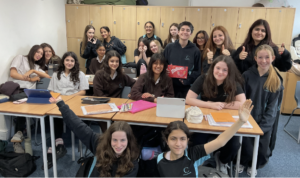
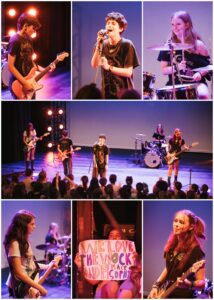
The last week of term – more properly, the last three and a half days of term – have disappeared in a flash! Highlights have been the Year 10 Days as a Sixth Former in which they enjoyed taster lessons in their potential A level subjects and enjoyed copious amounts of tea and toast in the Sixth Form Centre, and Wednesday night’s remarkable Mediterranean Mosaic Summer Concert. With guest appearances from the Rebetiko Carnival band, thanks to Mr Kokkinos, the evening was a joyous and vibrant celebration of music from across the Mediterranean. The theme was carried through into the interval too, with delicious Greek snacks on offer. Huge thanks to Mr Raine and the Sixth Form team for the former, and Mr Boxall and the Music department for the latter. You have enabled us to end the year on a high.
I am still very sad not to have seen you all at Founders’ Day on Saturday last week, and I hope that you were able to watch our video version of the Founders’ Day service over the weekend. I realised on Tuesday that I had not sent it directly to all our pupils so I used the opportunity of assembly to share a couple of my key themes from my speech. I addressed the social media ban, knowing how much it will affect those in Years 7 to 10 from April next year. I was able to congratulate Years 8 and 9 for the contributions they made to the session with Tulip Siddiq MP when she visited earlier in the term, and remind them that this is what makes their school special.
Many of them won’t realise that it isn’t routine in some schools for pupils to be asked their opinions, to be offered numerous opportunities for leadership, to set the agenda and lead the debate. As I said to Year 10 and their parents on Tuesday evening, when our students leave Channing they will take it as expected, their right, that they should continue to enjoy all of these things and, most importantly, they will have the tools to make themselves heard and ensure that this remains the case. We take our mission of educating the women of tomorrow really seriously, cultivating well-rounded individuals, prepared to not only give their best academically, but also to navigate the complexities of the world that awaits them.
While the outside world remains unequal and attitudes which marginalise and belittle women persist, there is still plenty of work to be done. It’s work we embrace wholeheartedly to ensure that they will leave Channing ready to express themselves, stand up for their rights and beliefs, and take the lead in whatever sphere they choose. At assembly on Tuesday, I asked the girls to remind themselves of the things they have achieved this year. They may not have come with stickers or certificates or medals – although some of them will have done – but if they think about what they know and can do, what more they know about themselves and their capabilities now that they didn’t in September, they must consider their year a success.
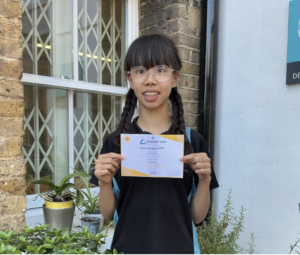
It was a pleasure to do just that in Mark Reading today, celebrating successes from a diverse range of academic subjects and extracurricular activities which reflect the unique and individual combination of interests that our students can pursue. In time-honoured tradition, it was also the time to wish our leavers well, and celebrate other important life moments for our staff.
Congratulations and thank yous
We have five members of staff getting married this summer: Mr Morgan, Head of History, and Ms Wilberforce, Head of Careers and Higher Education, in the Senior School; and Miss Jackson, SENCO, Miss Micallef, Head of Early Years and KS1, and Miss Kitsis, Head of KS2, in the Junior School. We wish them all the happiest of wedding days, and much joy in their lives with their new spouses.
We also thanked Mr Raine for his year as Director of Sixth Form, covering Mrs Tomback’s maternity leave. He has been a superb leader and role model for staff and girls alike, and we thank him for all his hard work. He will move into a new role as Director of Studies next year, and we look forward to working with him in that capacity from September.
A final thank you went to Mr Boardman, Assistant Head Teaching and Learning, who is stepping into a new role as Lead for Coaching and Professional Learning from September. His love of research evidence, and ability to distil this into a set of Principles of Great Teaching which give all of us a shared understanding of what it means to teach at Channing, has been invaluable. I am delighted that he will continue to use his expertise to shape our professional learning in the coming years. Thank you.
Farewells
In the Junior School, teaching assistants Miss Moore and Miss Crossdale are returning home, to Australia and Yorkshire respectively; and we say goodbye to form teacher Mr Westerman, who has been with us as a Year 6 form teacher for the last two years.
In the Senior School Ms Naseer has completed her first year as a Physics teacher with us, while Mr Waring has returned to us this year for a maternity cover in French and Spanish, and taken on the role of Head of Year 8 for good measure! Ms Harmer has been a valued member of the Art department for the last two years, covering maternity and sabbatical leaves. We wish all of them the very best with their next chapters.
While Mr Davies, Deputy Head (Academic) has only been with us for 5 terms, his impact was instantaneous. We could not be more grateful for his focus on planning and data-led interventions, which have done so much to harness the academic ambition we have for our pupils. He leaves us to take up the headship at Weston Park Primary School, from where he joined us less than two years ago: Mr Davies, our loss is certainly their gain, and you will be much missed for your sharp insight, calm approach and wicked sense of humour.
Sadly we are saying goodbye to two members of the Maths department this year. Ms Cooper joined us in 2019 as second in the Maths department and Head of Engineering, a role which soon transmogrified into that of STEM Coordinator. She pioneered our incredibly successful participation in the nation Teen Tech competition and has championed women in STEM at every opportunity. Having spent part of her most recent maternity leave in Thailand, we are delighted for her that she and her family will return there in August when she takes up the post of Head of Maths and Computing at a British international school. We wish you every success and happiness in your new life overseas.
Mr Martini-Phillips joined Channing in 2016 as Head of History, and has subsequently held the roles of Assistant Director of Sixth Form and Head of Year 11. In all three of these his work has been characterised by boundless enthusiasm and the desire to support both pupils and staff to the best of his ability. Girls and parents may not be aware of his alter-ego as Panto Pete the Second, mastermind of the staff panto – or indeed that he has been the unofficial Head of Gambling and coordinator of all staff sweepstakes, including World Cups in several sports and, of course, the Eurovision song contest! Mr Martini-Phillips, we shall miss your huge love of your subject, care for the girls, your wonderful sense of humour and endless cheer in the staff room. Forest School are lucky to have you as their new Assistant Head of Sixth Form and we wish you every success in this next step in your career.
Our second Maths farewell is to the longest-serving member of staff leaving this year: Mr Daurat, who joined Channing in 2014. Beloved in the Maths department for his ability to explain anything, repeatedly, with endless patience, and a stalwart of the Duke of Edinburgh’s Award programme, Mr Daurat has contributed so much to school life. He is an endlessly interested and interesting colleague, with a whole range of eclectic passions in his life beyond school too. Mr Daurat, there are thousands of girls who owe their love of Maths and success in DofE to you: we wish you a long and rewarding retirement.
Our last goodbye is to Mr Grossman, who joined Channing in 2017 as Head of Science, Technology and Engineering and who also morphed into a new job role when he became Director of Digital Learning and Technology in 2021. It’s hard to overstate the impact he has had on the school as a phenomenal teacher of Biology, Physics and Computing; instigator of Fish Club (more properly known as Marine Biology Club); Duke of Edinburgh’s Award assessor; and always at the cutting edge of our digital provision, whether for students, parents or staff. It is entirely fitting that he leaves us for a well-deserved promotion to be Deputy Head for Strategy & Innovation at Alleyn’s Hampstead. Mr Grossman, you go with our very best wishes for a happy and successful next chapter.
Dates for next term
As we come to the end of the year, we are already looking ahead to September and making plans for the year to come. Please note now some dates for your diary, which are the first opportunities for you to come into school next term:
Year 7 Parents’ Welcome Evening
Wednesday 9 September, 1730 – 1915
Year 8 Parents’ Welcome Evening
Thursday 24 September, 1800 – 1945
Year 9 Parents’ Welcome Evening
Thursday 17 September, 1800 – 1945
Year 10 Parents’ Welcome Evening
Thursday 10 September, 1800 – 1945
Year 11 A level Options Evening
Tuesday 15 September, 1700 – 1930
Year 12 Parents’ Welcome Evening
Wednesday 9 September, 1830 – 1945
Year 13 Parents’ Evening
Wednesday 14 October, 1630 – 1930
And in the meantime…
While the vast majority of us will be heading off on holiday, I’d like to send a massive thank you to all those members of the support staff, especially Mrs Blase, Facilities Manager, and her team, who will be working hard on site throughout the summer to ensure we are ready for the start of the new academic year. We know it makes life a lot easier not to have the rest of us around while you’re doing it – but please know that your efforts do not go unnoticed.
My other thanks go to those members of staff who have organised and will accompany the trips going out this weekend. Our DofE team, led by Ms Yun, will be heading to Brecon in Wales with the Year 12 Gold DofE Assessed Expedition, while Mr Raine, Ms Kung and Ms Pavlopoulos are off to Berlin with the Year 10 History & German trip. Thank you for giving up the start of your holidays to give our girls these wonderful experiences – we hope you all have a great time!
And so to the summer holidays. I wish you the break you hope for, whether adventuring far from home or relaxing in the back garden – and any other combination in between! Thank you for your unstinting support of me, your daughters and the school this year: it has been very much appreciated.
With warmest wishes,
Lindsey Hughes
Headmistress