 VISIT US
  CONTACT US
  SUPPORT US
 APPLY NOW
Word from the Head – 15 May 2026
Dear Parents,
There is a distinct atmosphere that descends upon the school corridors as we approach the summer term. It is a palpable shift in energy, a sharpening of focus that serves as a reminder of what our students are truly capable of when a goal is clearly in sight. This is particularly true for all of our public exam candidates and our Year 10s and 12s, all of whom have started their respective exams with admirable resolve.
This week, I had the pleasure of visiting several Year 9 lessons, and I was struck by the intensity and purpose in the room. With their internal exams on the horizon, the girls were not just working; they were deeply immersed. What impressed me most was the level of collaboration. We often think of exam preparation as a solitary endeavour, involving late nights and flashcards in isolation, but in these classrooms, the girls were leveraging their collective brainpower. I watched as groups deconstructed complex topics together, debating exam strategies and clarifying misconceptions. There is a unique magic in peer-to-peer learning; when a student explains a concept to a classmate, their own understanding transitions from familiarity to mastery. This collective effort does not just improve individual marks; it builds a culture of shared intellectual ambition.
It is a fascinating psychological quirk that an imminent deadline provides such powerful motivation. When an exam is close, distractions seem to fade into the background. However, it led me to muse: imagine the heights we could reach if we harnessed this level of focus throughout the entire year. While the exam sprint is a useful tool for consolidation, the real secret to academic fulfilment lies in turning that intensity into a regular routine. Doing the right thing, the deep thinking, the extra practice, the collaborative questioning, should not just be a reaction to a deadline. It should be our steady state.
The transition from a deadline-driven student to a routine-driven scholar is backed by significant cognitive research. Experts in neurobiology often speak of neuroplasticity, the idea that our brains physically restructure themselves based on our habits. When students move beyond the exam sprint and embrace regular, daily routines, they are doing more than just studying; they are automating excellence. Research suggests that when a task becomes a routine, it migrates from the prefrontal cortex, the part of the brain that requires significant willpower, to the basal ganglia, which handles automatic behaviours. By doing the right thing consistently, our girls actually save mental energy. As the psychologist William James famously noted: “There is no more miserable human being than one in whom nothing is habitual but indecision.”
By embedding the collaborative spirit and deep focus I saw in Year 9 into their daily rhythms, our students move from a state of stressful cramming to one of effortless mastery. This is the heart of Girls Enjoying Success: the confidence that comes from knowing that your habits, not just your last-minute efforts, have prepared you for any challenge.
You might wonder why I am writing about building habits now, towards the end of the academic year. Surely, it is far too late and this is a conversation for September. As you can imagine, our preparations for the new year are well underway at this point and much of my own work is based on ensuring we give everyone, staff, pupils, and parents, the best possible start to the new academic year. One consideration in this is what can be done now to set the girls up for success. This led to an interesting conversation with Ms Lindsay after observing the Year 9 pupils: how do we capitalise on the laser-sharp focus we are seeing now and ensure that we bridge the next weeks and the long summer without losing momentum? What if we could ensure now that we start with routines in place rather than having to build them, especially as pupils in this year enter their important GCSE years? We will spend the rest of the term working towards that goal.
Yesterday, I was delighted to welcome Tulip Siddiq, our local MP for Hampstead and Highgate. As you may be aware, the government is currently consulting on potential social media restrictions and she was able to spend a PSHE lesson with our Year 8 and Year 9 pupils to ask them about their views. You will not be surprised that they certainly had opinions and were not shy to share these, with many of them passionately speaking about the challenges and pitfalls of social media as well as opportunities. Wherever you sit on the topic of bans, one comment in particular struck me as both incredibly wise as well as thought provoking. To summarise, a pupil noted that we are discussing banning social media for children and yet it is the adults who have created it and add harmful content. Hence, the children are impacted in more than one way by decisions that adults have made, often for profit.
It is absolutely right that young people are heard in this process and I am grateful for Tulip Siddiq’s visit. In this context, please find the ongoing consultation here should you wish to partake.
And lastly, I am delighted to report that we are the School of the Week on Talk Education, described as:
A visionary all-girls school full of extremely confident, capable and engaging young women, this north London gem knows just how to create a vibrant learning environment where no one gets left behind and everyone is inspired to embrace the school’s ‘10 per cent braver’ approach to life. Excellent academics, fantastic pastoral care and a wonderful way of imbuing girls with self-confidence, Channing makes a strong argument for single-sex education. If you’re a north London family with daughters, it’s definitely one to put on your shortlist.
On that note, with warmest wishes for the weekend,
Freddie Meier
Deputy Head


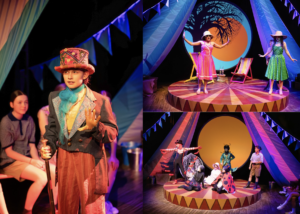
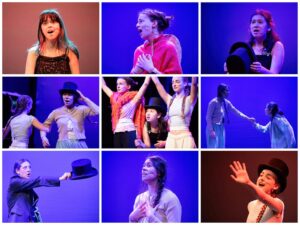
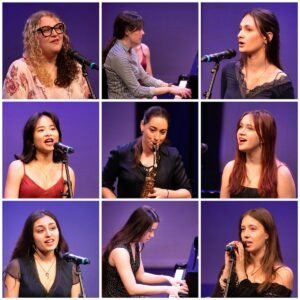
 progressed with Elise C. playing sensitively on the piano ‘Claire du Lune’ by C.Debussy, and Maya H-B giving a stylish vocal performance of O.Dean’s ‘Dive’. Next, it was the turn of Eve C. and Mei-Xing L. who treated us to an emotional vocal duet arrangement of ‘For Good’ from the musical Wicked; it is fair to say that there were few tears in the audience by this stage, given the significance of this concert which for many of our pupils marked the end of a musical journey at Channing. Then, followed Anna G. with a confident and flawless vocal performance of ‘Slow Down’ by Laufey/Fenn/Stewart. The next item in the concert – ‘La Campanella’ by F.Liszt – was delivered by Maika P-Y on the piano which included some music pyrotechnics; this is a fiendishly difficult piece to play and Maika gave a courageous performance displaying jaw dropping facility in places. This was followed by Teresa G. who treated us to an elegantly sung aria ‘Non So Piu’ from ‘Le Nozze di Figaro’ by W.A.Mozart. Next, we had another round of music pyrotechnics – title of the piece ‘Pequena Czarda’ by Itturalde – this time on the saxophone, despatched with aplomb and impeccable musicality by Kezia C. The music baton was passed on to Molly S. and Elizabeth S. next, who performed their solo items with equal self-assurance, style and poise; Molly sung ‘Always Starting Over’ from the musical If/Then, and Elizabeth played on the violin the ‘Adagio’ from Sonata no.3, op. 108 by J.Brahms. The concert came to a close with a beautiful trio arrangement of E.Elgar’s ‘Salut d’Amour’ performed with elegance by Hana D. on the viola, Eve C. on the double bass and Mei-Xing on the piano.