 VISIT US
 CONTACT US
 SUPPORT US
 APPLY NOW
Word from the Head – 16 October 2026
Dear Parents,
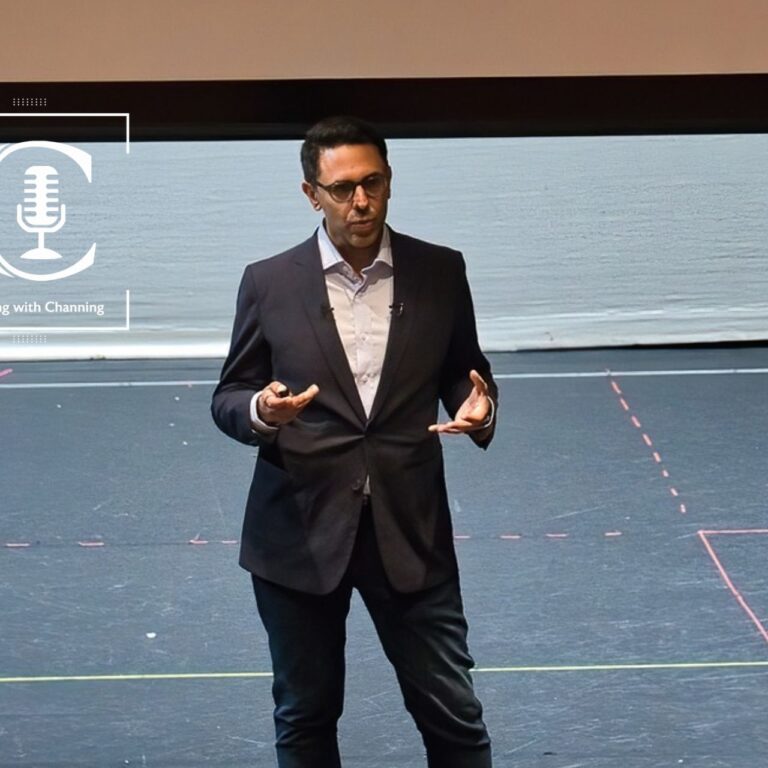
You all know how much I love a bit of serendipity, and this week a number of things have come together in a really useful way. Yesterday we released the latest episode of our award-winning podcast, Chatting with Channing, which features an interview with Channing Governor and ed tech specialist, Rahim Hirji. It was recorded last week before his fascinating talk on his new book, Superskills: the Seven Human Skills for the Age of AI, which many of you attended. Meanwhile on Wednesday Mr Raine, Director of Studies, was attending the HMC AI Conference – and it transpires that everything Rahim said, and that we are already doing in school, was being cited as best practice among the leading independent schools attending the conference.
At Channing, our goal is to foster intelligent, creative users of technology who are ready for whatever comes next. We have long championed the balanced use of technology to support learning, with the iPad or Chromebook sitting alongside the pencil case and calculator as part of our students’ toolkit for school. We take time and care in training our students in their use of tech and, as Mr Raine explained at our Welcome Evenings at the start of term, everything that happens on those school devices is carefully ringfenced and monitored.
It was interesting to see in The Times this week that Winchester College has seen the benefits of such an approach and rolled back from an environment where every lesson took place behind a Surface screen. They’re now pursuing a model like ours, where physical books, folders and reading for pleasure are prized. Just as at Channing, devices are reserved specifically for moments where they add clear educational value, responding directly to research highlighting the cognitive damage and distractions associated with excessive screen time.
However, regular readers of Word from the Head will know how much I hate the term ‘screen time’ as a catch-all for everything to do with technology. As I have written before, Dr Kaitlyn Regehr’s work Smartphone Nation makes some really useful and clear distinctions. She challenges the traditional, limited metric of ‘screen time’, a concept rooted in obesity research, arguing that we must instead focus on ‘digital nutrition’. Rather than viewing all screen use as equally detrimental, she argues that we should distinguish between passive, solitary scrolling and active, collaborative engagement. Watching the television together as a family, reading a news article or working together in a presentation online, and doom-scrolling Instagram are all screen time, but it’s clear which ones might be more or less beneficial.
That concept of digital nutrition means that the more processed, or algorithmic, the content, the less of it we should consume. The Government’s proposed social media ban will go a long way to managing this issue for our young people, and we await their guidance which is apparently due later this term.
In the meantime, though, the third part of the triangle, after technology and social media, is the development of AI. Here Rahim’s podcast interview offers support for our balanced approach and some thought-provoking ideas about what might come next. He highlighted the risk for AI users to lose their curiosity, suggesting that instead of doing the thinking themselves, the danger is that users start using machines to do the thinking for them. He offers the excellent acronyms HATS and HATE, standing for Humans At The Start and Humans At The End. As he puts it in his interview:
What that means is that when you’ve got a problem or something that you’re trying to solve, you should use your brain first. Maybe sketch something out on a piece of paper, figure out what the problem is that you’re trying to solve, and only then can you go to AI or the machine. And then ultimately, at the end, you’ve got to sign off what it is that you’re doing. So whether that’s in the workplace or whether it’s part of your homework, you need to say, “This is what I believe. I believe this to be true”.
This chimes with Sir Anthony Seldon’s final keynote at the HMC AI Conference, in which he emphasised that educational strategy must focus on the human residual – essential qualities such as empathy, love, morals, and ethics – to prevent the cognitive offloading Rahim described. The message was further supported by our Year 13 Sustainability Officers Bella and Imogen this morning, whose wonderful assembly challenged us to think carefully about AI and our environmental responsibilities. Their message was clear: the ease with which we can use a technology should not stop us from questioning whether we need it.
At Channing, we want students to make thoughtful choices about AI, recognising that convenience can come at a cost, both to the environment and to their own learning. Our guiding principle is that AI should be a learning tool, not an answer engine. Where teachers direct its use, it can offer valuable opportunities to explore ideas, test understanding and receive feedback. Beyond this, we encourage students to avoid turning to AI for basic tasks they can undertake themselves. Recalling a fact, planning a paragraph, summarising reading or working through a problem are opportunities to develop understanding. The effort involved helps students recognise what they know, identify gaps and decide what to try next. Handing these processes over to AI can mean losing the very practice that builds confidence and independence. Completing the task is not the same as learning from it.
As the assembly highlighted, there is also an environmental cost behind the screen, through the electricity, water and materials that support AI systems. We therefore want students to pause before opening an AI tool: could they find the answer in their notes, consult a book, use a straightforward search or think the problem through themselves? Unnecessary prompts and repeated requests for generated content deserve the same scrutiny as other avoidable uses of resources. Environmental responsibility includes the digital choices we make each day. My thanks to Imogen and Bella for a well-researched and thought-provoking assembly on this important perspective.
As parents you can help reinforce this by encouraging children to attempt work independently and follow their teachers’ guidance about when AI is appropriate. Asking “What have you tried?”, “What do you already know?” or “Where could you look?” gives children space to think before seeking help via Gemini Guided Learning. As you know from our focus on the Learning Pit, we want our students to understand that productive struggle is a normal, valuable part of learning. Choosing to think for themselves is both an investment in their own abilities and an expression of care for the world around them.
After half term you’ll hear more from Mr Raine about the Channing approach. Sadly, I doubt it will make headlines in The Times – but it’s still something of which we are very proud.
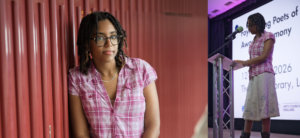
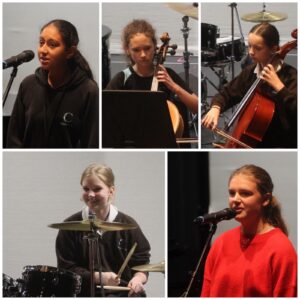
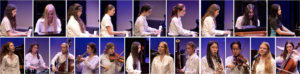
This week we have also had cause to be very proud of our students and celebrate two phenomenal successes. On Monday Year 13 student Lillia was announced as just one of 15 winners of the Foyles Young Poet competition for 2026. With over 11,700 entries worldwide, this is an extraordinary achievement, and there is more detail in the section below. I’m not allowed to tell you what Mr Boxall, Mr Kokkinos, Miss Bacon, Mrs Daniels and I were doing in Bristol last night with most of Kezia Colton’s family and a number of girls from the Class of 2026. However what we can certainly say is that we’d love you to watch the BBC Young Musician competition which is being broadcast at 7pm on BBC2 for the next three Sundays!
On Wednesday evening I was at the Independent School of the Year Awards, where we had been shortlisted as one of five finalists for the Independent Girls’ School of the Year. We may not have won, but to be in the top 5 was nonetheless a great accolade – and when I get to write Words from the Head like this, I feel confident that we are getting something right!
And so to half term. My thanks to Ms Yun and Mr Hill for accompanying the Year 12 Gold Duke of Edinburgh’s Award students on their practice expedition, to Mrs Blake for taking our Year 11 and Sixth Form Geographers to Iceland, and to Mrs Steinberg for the GCSE and A level Spanish trip to Madrid. Thanks also to Mr Pelton, Mrs Walker, Mr Matjilla, Ms Flint and Mrs Williams for going to Iceland and to Ms Loosli, Miss Ward and Miss Lindsay for accompanying the Madrid trip. We know how much our students gain from these adventures and I am most grateful to the staff for taking the time to organise them, and giving up their holiday time to support the girls.
Wherever you are going and however you are spending the next two weeks, I hope you have a wonderful time!
With warmest wishes for the weekend,
Lindsey Hughes
Headmistress