 VISIT US
 CONTACT US
 SUPPORT US
 APPLY NOW
Word from the Head – 9 October 2026
Dear Parents,
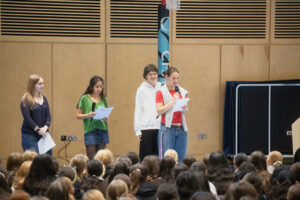
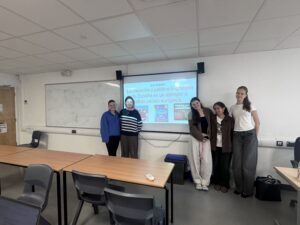
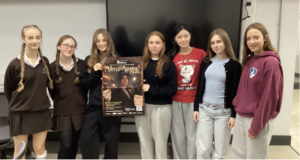
When was the last time you went for a walk without a destination or a deadline? In the fast-paced daily routine of school runs, extra-curriculars and chores, we rarely get the chance to simply stroll. Yet, as Sixth Form members of the school’s Literary Society explored during Tuesday’s assembly presentation on National Poetry Day, there is a strong connection between two words that sound almost identical: wandering and wondering.
As they explained, to wander is to walk without a rigid goal. When we step off auto-pilot and allow our feet to stroll aimlessly, our minds naturally follow. We begin to notice the small details we usually rush past: the glint of sunlight on a brick wall, a sudden shift in atmosphere, or a burst of colour in a crowded street. This quiet mental space is precisely where wonder takes root, transforming the familiar world into something full of mystery, creative potential – and poetry.
They went on to show us that the relationship between physical walking and mental curiosity has a rich literary history. In 19th century Paris, the poet Charles Baudelaire popularised the archetype of the flâneur, an urban stroller who stepped out of the study and into the bustling city streets to find creative inspiration amid the chaos of modern life. For Baudelaire, aimless wandering was the ultimate key to unlocking awe and artistic vision.
However, they made the important point that the simple freedom to wander was not always available to everyone. As feminist scholar Janet Wolff noted in her 1985 essay The Invisible Flâneuse, 19th century women were largely excluded from this tradition. The public square was strictly gendered; a woman walking alone in the city was often judged, scrutinised or viewed with suspicion, rather than respected as an independent observer.
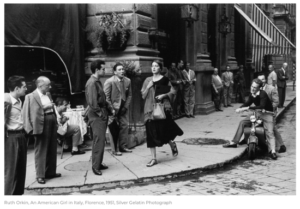
I really enjoyed the students’ considered analysis of Ruth Orkin’s iconic 1951 photograph of a woman walking down an Italian street. Surrounding her is a crowd of men whose gazes follow her every step. Yet, looking closely at her posture, you see something remarkable: her head is held high, her shawl is wrapped tightly around her, and she steps forward with quiet defiance. She refuses to be driven out of the public square.
Decades earlier, American modernist poet Djuna Barnes captured a similar resilience in early 20th century New York. In her poem From Fifth Avenue Up, Barnes exposed how high society tried to constrain women, writing about urban spaces directly from a woman’s perspective and proving that claiming public space requires refusing to be hidden or silenced.
The girls ended their assembly by making the point that this freedom to move, observe and find wonder in the world is far more than a history lesson: it is a human rights issue that affects young people directly today. Around the world, millions of women and girls are still denied the basic right to occupy public spaces safely. In Afghanistan, for example, over 2.4 million girls are barred from secondary education and restricted from leaving home without a male guardian. Closer to home, this restriction shifts into digital spaces: in the UK, 1 in 5 women report experiencing online harassment simply for expressing themselves online. Their message was simple: whether on physical city streets or digital platforms, the ability to wander, explore, and create without fear is a fundamental right.
The assembly impressed me on several levels. The content and ideas the Lit Soc students shared were extremely sophisticated, modelling the intellectual ambition for which our Sixth Form is increasingly renowned. Despite the challenging ideas, I watched Year 7 girls hanging on the presenters’ every word. Their ability to make the concepts engaging, articulate them so clearly and support their talk with images and poems was remarkable. It comes as little surprise that the majority of the group are in the process of making their Oxbridge applications, and I have no doubt that the research for the assembly, and experience of presenting it, will be invaluable in their interview processes. My thanks to them, and to Dr Hayward for facilitating their inspiring Lit Soc discussions.
I also enjoyed the fact that their focus on National Poetry Day went to the heart of our purpose as a girls’ school, speaking to an issue which is of immediate relevance to the whole student body. It chimed with my own experience of hearing Dame Carol Ann Duffy, Poet Laureate, read her own work at the HMC Conference last week. While I was there I picked up a copy of one of her earliest collections, The World’s Wife, and have revelled in her imagination of the untold stories of the wives of famous real, mythical and fictional men.
In other events this week, on Monday Mrs Gardiner and the SEND team hosted a valuable SEND Information Evening for parents of Year 10 – Year 13 students. For those parents who were unable to attend, please see the Y10-13 SEND Information Evening SLIDES here.
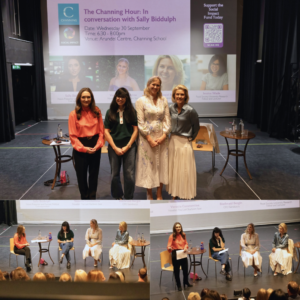
On Wednesday evening we were delighted to welcome digital technology and AI specialist and Channing Governor, Rahim Hirji, to speak on his new book, Superskills. His insight into the seven human skills which he considers will be invaluable in the age of AI was fascinating. They chimed with our goal to foster intelligent, creative users of technology who are ready for whatever comes next. The evening generated a lot of animated conversation and questions: our thanks to Rahim and everyone who attended, raising over £1,300 for the Channing Social Impact Fund in the process.
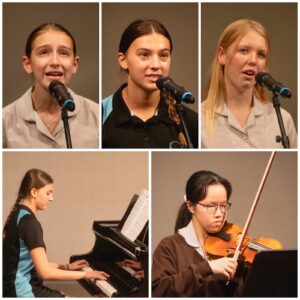
Finally, my congratulations to the Year 11 GCSE Musicians, whose exam concert last night was an absolute treat! The standard of performance was very high and it was lovely to see so many parents and fellow Year 11 students supporting the musicians. The variety of instruments and styles was extraordinary, from voice and piano to bassoon and drum kit, and jazz to Chopin via pop and musical theatre. Many thanks to Mr Boxall and the music department for their encouragement and support of this important part of their GCSE assessment.
With only a week to go until half term, we are looking forward to next week and in particular to the Independent School of the Year Awards next Wednesday. We have been shortlisted as finalists in the Girls’ School of the Year category and, while of course I hope we will win, the accolade alone is testament to the hard work of everyone in the Channing community in creating such a special environment. I will let you know how we get on!
With warmest wishes for the weekend,
Lindsey Hughes
Headmistress